
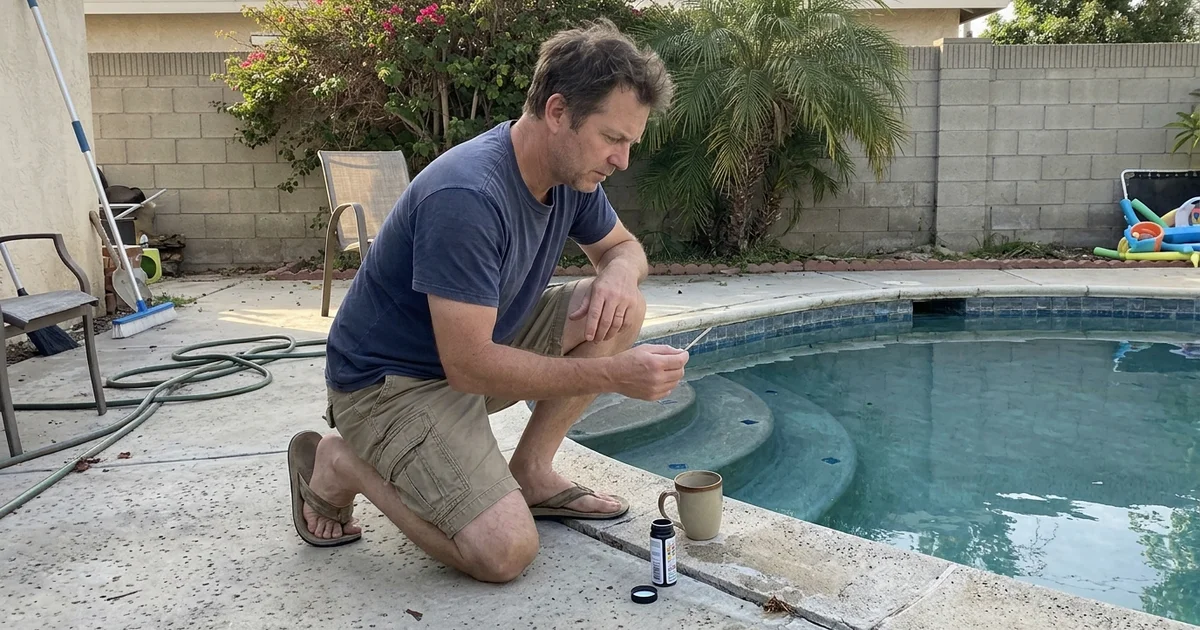
Most owners ask the same thing: is pool service worth it, or can you maintain a pool yourself? DIY costs less in cash. Service costs less in time and risk.
National 2026 cost guides put DIY at roughly $80 to $200 a month. Weekly professional service usually runs about $120 to $250. That gap is smaller than most people expect, because DIY owners pay retail for chemicals.
So the DIY pool maintenance vs pool service decision comes down to three things: your free time, your comfort with chemistry, and what a mistake would cost. Here’s an honest look at both sides, including where a professional pool service earns its fee and where it doesn’t.
The Weekly Time Commitment
Plan on 1 to 3 hours a week to keep a typical pool in good shape. Some weeks run longer, especially in summer and after wind storms.
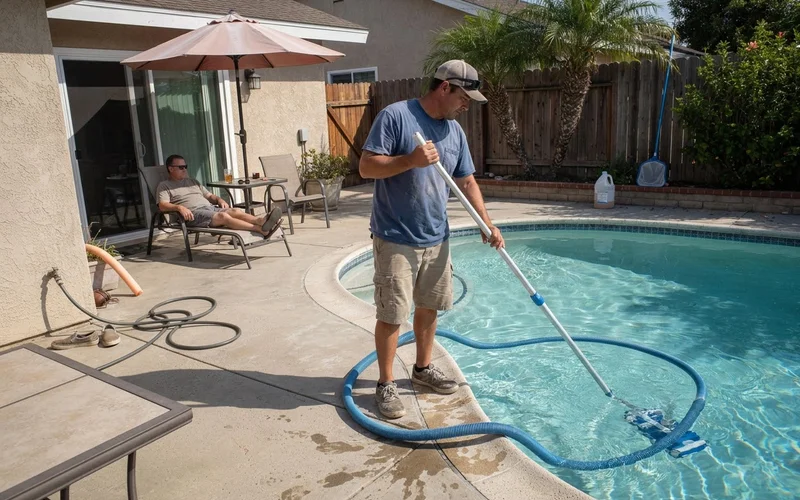
A normal week looks like this:
- Test the water and add chemicals
- Skim, brush and vacuum
- Empty the skimmer and pump baskets
- Check the water level
Then add trips to the pool supply store and the time you spend figuring out why the water turned cloudy. DIY care isn’t hard, but it’s steady.
The workload also swings through the year. Spring startup, summer heat waves, fall leaf drop and Santa Ana wind events all pile on extra work. Those are usually the weeks you’d rather be swimming or traveling.
Chemical Purchase, Storage and Safety
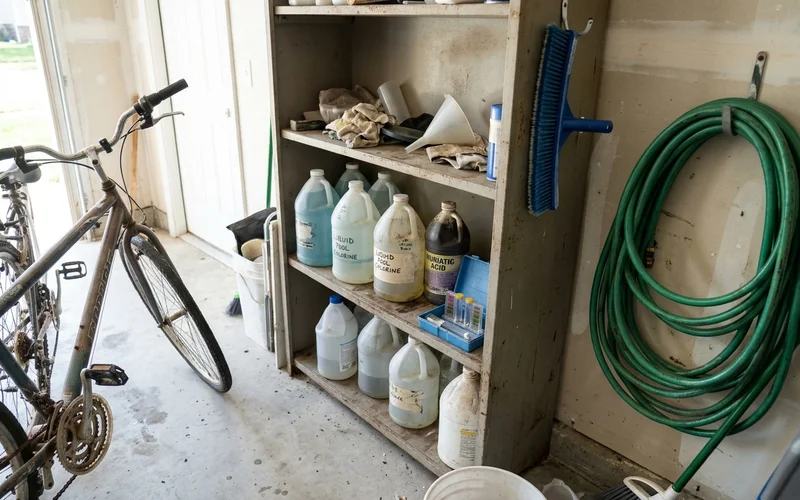
DIY owners buy, store and handle every chemical themselves. Chlorine and muriatic acid shouldn’t be stored together. Keep both away from kids and pets, and don’t leave them in a closed garage where fumes build up.
Mixing them by accident can release dangerous gas. The CDC estimates pool chemical injuries sent about 4,535 people a year to U.S. emergency rooms from 2008 to 2017. More than half happened at home, and over a third involved children or teens.
The CDC’s advice is simple. Give each chemical its own dedicated storage spot, and don’t shuffle them around. Moving containers is how mix-ups happen.
Knowing the chemistry matters too. Our pool chemistry basics guide covers the target ranges. Reading a test kit is the easy part, though. The harder part is knowing how much to add, in what order, and how stabilizer and calcium change over time. That only comes with experience.
Where DIY goes wrong most often
Letting pH and calcium drift for months. The damage is slow and quiet, then shows up as etched plaster, crusted tile or a corroded heater.
The Cost of Mistakes
A single bad week rarely does the damage. The real risk with DIY is slow damage that adds up:
- Etched plaster from low pH or low calcium. It roughens the surface and can lead to an early acid wash or replaster. Calcium hardness for plaster pools is generally kept around 200 to 400 ppm.
- Calcium scale on tile from high pH, which needs professional tile cleaning to remove
- Pump damage from running dry with full baskets or a low water level
- Green pool recovery after a missed week during a heat wave
Any one of these can cost more than several months of professional service. Etching is also permanent. Once the surface feels rough all over, replastering is often the only real fix.
Side-by-Side Comparison
Service wins on time and risk. DIY wins on cash, and only by a modest amount. Here’s how the two stack up:
| Factor | DIY pool care | Professional weekly service |
|---|---|---|
| Monthly cost | Chemicals and supplies only, roughly $80 to $200 in national 2026 guides | Service fee, roughly $120 to $250 nationally, chemicals often included |
| Weekly time | 1 to 3 hours | None |
| Chemical handling | You buy, store and handle | Handled by the tech |
| Equipment checks | Only if you know what to look for | Every visit |
| Risk of costly mistakes | Higher | Lower |
| Vacations and busy weeks | Pool goes unattended | Service continues |
Local pricing varies with pool size and what’s included. Ask for a written scope so you can compare quotes fairly.
Hybrid Options for Hands-On Owners
You don’t have to choose all or nothing. A hybrid setup can work well if the chemistry stays consistent and someone experienced is watching the equipment. Here are a few ways owners split the work:
- Skim and empty baskets between visits, and leave chemistry, brushing and equipment to a pro
- Handle the summer yourself, then hire service for the busy fall leaf season
- Do the weekly routine yourself, with a pro checking chemistry and equipment once a month
If you’re weighing the options, we’re happy to give you a free estimate and an honest opinion about what your pool needs. Sometimes the answer is weekly service. Sometimes it’s a filter cleaning and a quick lesson on testing. Contact us and we’ll help you decide.