What Is a Pool Acid Wash?
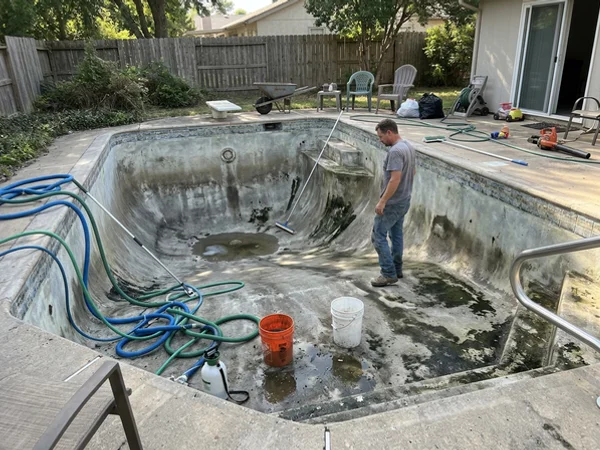
Ever look at your pool floor and wonder why those gray and brown stains won’t budge, no matter how much you scrub? Pool acid washing is often the answer.
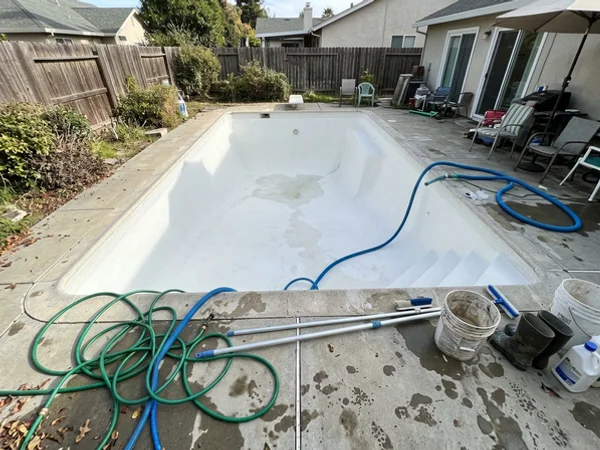
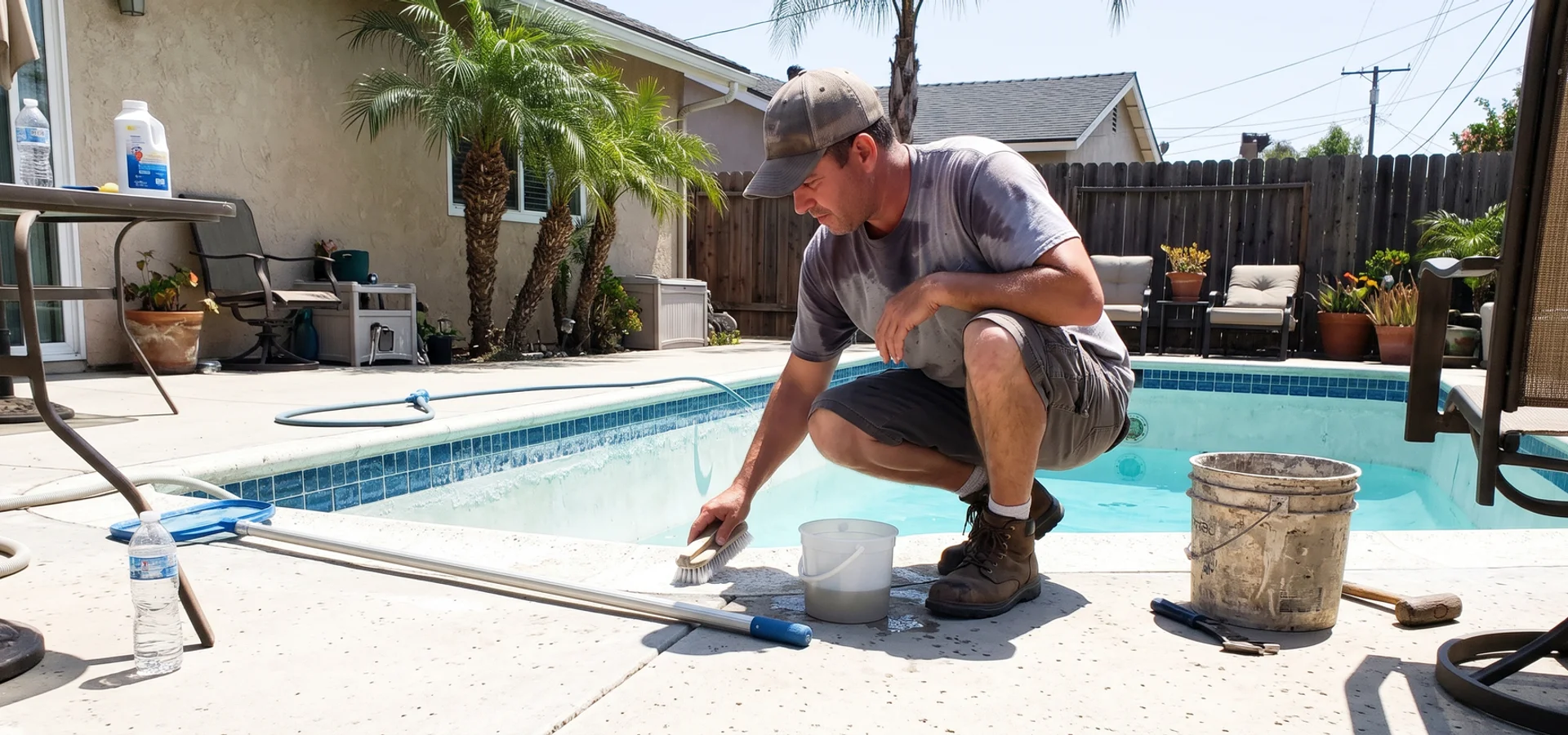
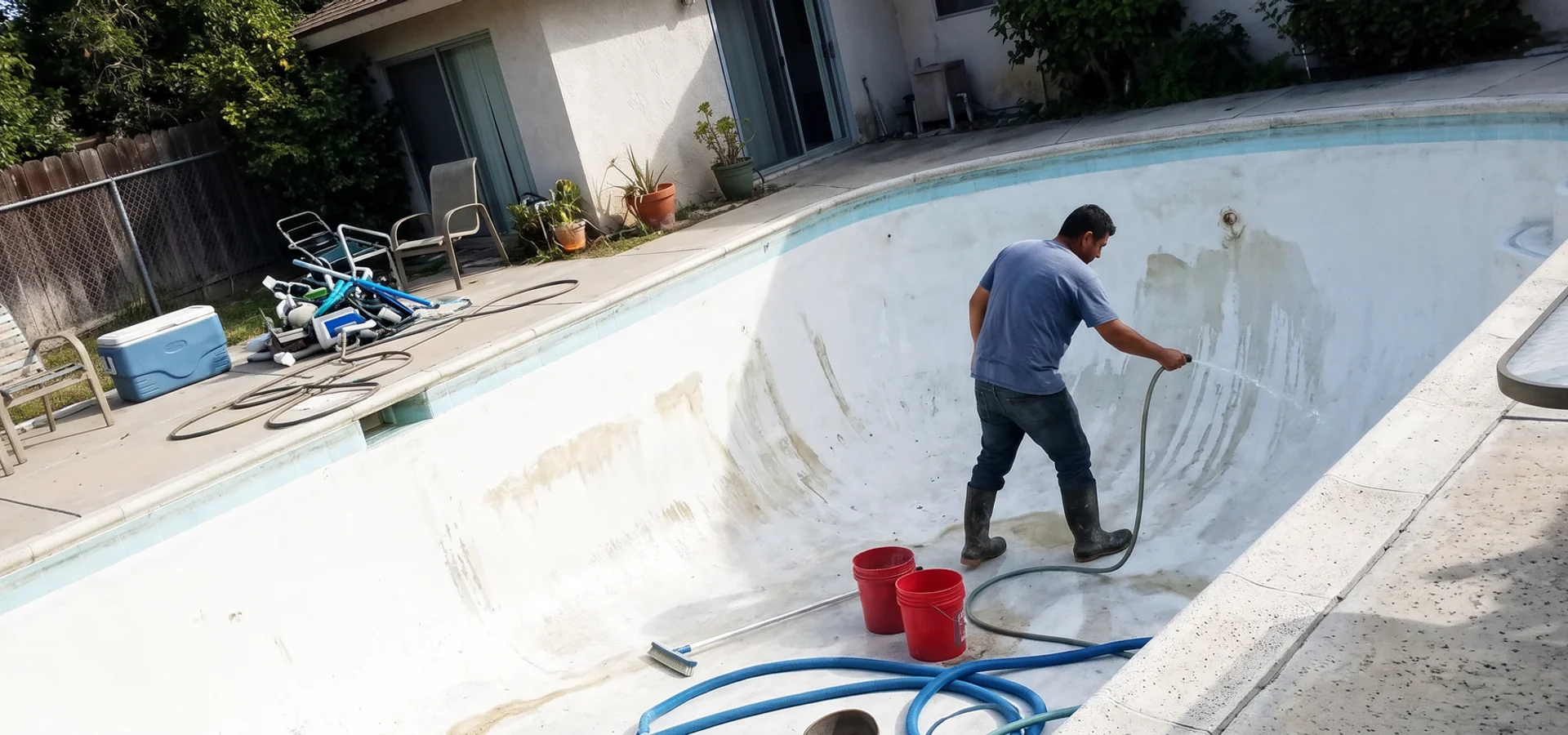
It’s a deep cleaning for pool plaster. We drain the pool, then apply a diluted solution of muriatic (hydrochloric) acid to the walls and floor. The acid dissolves a very thin layer of the finish and takes embedded stains, mineral deposits and stubborn algae with it. Fresh plaster is left underneath.
After that, we rinse the surface and neutralize the acid with soda ash. Then we clean out the residue and refill the pool.
It works on problems that brushing and chemicals can’t reach. Copper and iron staining from old equipment or fill water, gray and brown mineral deposits from years of hard-water evaporation, and black algae that roots into the plaster are all common in older Anaheim-area pools. When a stain is set into the surface, the only way to remove it is to remove a little of the surface.
That’s also why we’re careful. Every acid wash takes off some plaster, and plaster doesn’t grow back. Pool plaster is often only about 3/8 inch thick, so there’s only so much to spare.
Before we recommend a wash, we inspect the stains and the finish. Here’s how we usually sort it out:
| What you’re seeing | What usually fixes it | Why |
|---|---|---|
| Organic stains from leaves and algae | A chlorine wash, which is gentler | The stain sits on the surface and bleaches out without taking off plaster |
| Scale at the waterline | A tile cleaning job, not an acid wash | The deposit is on the tile, so the plaster doesn’t need to be touched |
| Metal or mineral stains set into the plaster | An acid wash | The stain is in the surface layer, so a thin layer has to come off with it |
| Thin or etched plaster | May be too far gone to wash safely | Every wash removes more finish, and there may not be enough left to spare |
We’ll tell you honestly which situation you’re in.
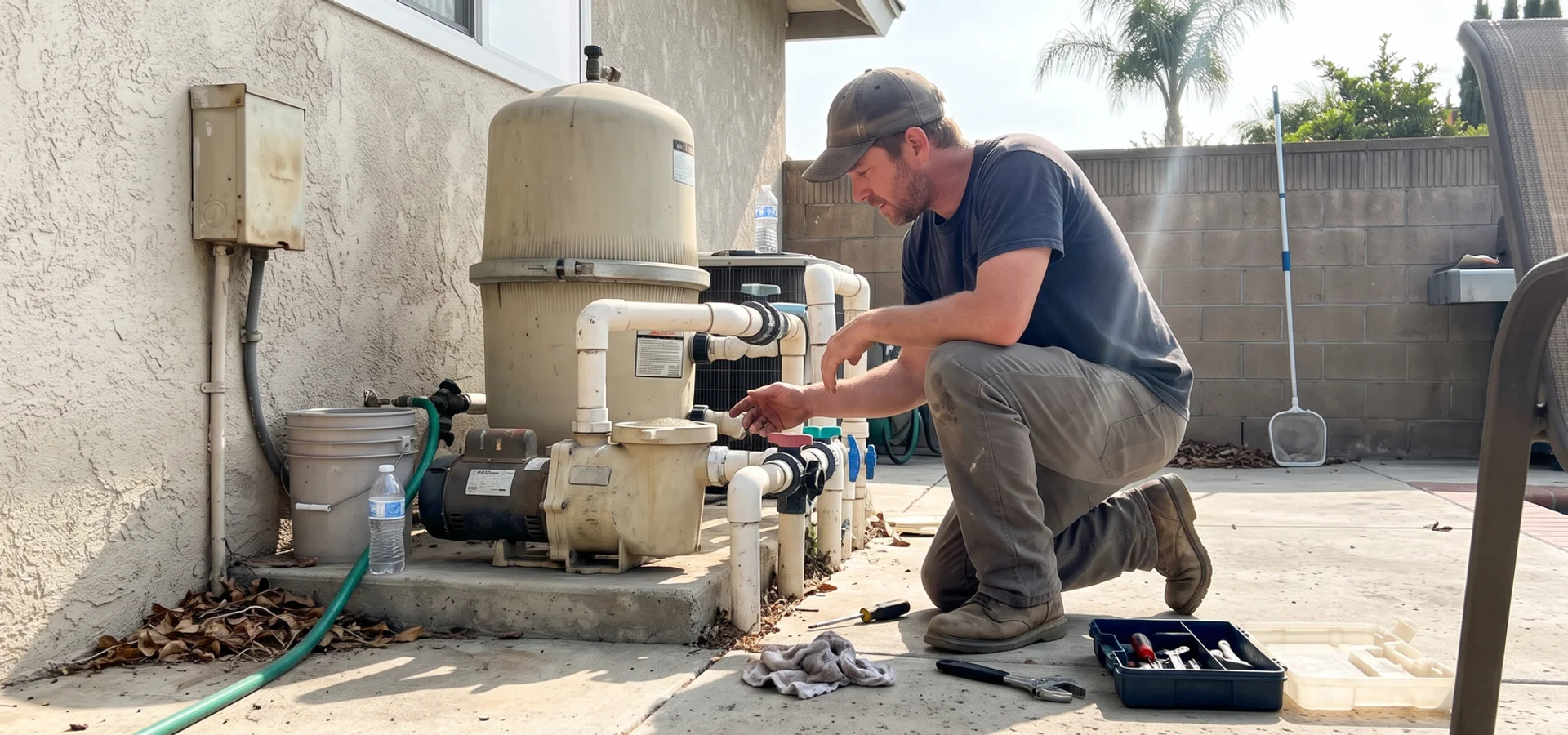
When an acid wash is the right call, we handle the whole job. We drain with a submersible pump, and we keep the pool empty only as long as needed because of hydrostatic pressure. That’s groundwater pushing against an empty pool shell, and it can cause real damage if the pool sits dry too long.
Then we wash, neutralize, clean up and refill. A proper start-up chemistry routine follows, so the fresh plaster stays bright. Pebble and exposed-aggregate finishes and colored plaster get a gentler approach.
Common Problems We Solve
Gray, brown or rusty stains on the floor
These are usually mineral or metal stains from fill water, old copper equipment or years of chemistry swings. An acid wash can remove stains that are set into the plaster.
Black algae that keeps coming back
Black algae roots into plaster where brushing can’t reach. Stripping the surface layer and resetting the chemistry is often the most reliable fix.
A pool that looks dull and blotchy
Years of uneven chemistry leave plaster looking mottled. A light acid wash can even out the surface.
Not sure which wash you need?
Our guide on acid wash vs chlorine wash explains how to match the treatment to the stain.
When Is an Acid Wash the Right Choice?
An acid wash makes sense when three things line up:
- The stains are truly embedded.
- The plaster is still thick enough to handle it.
- Lighter options won’t do the job.
It’s also a common step before selling a home or after a pool has sat green for a long time. Because each wash thins the plaster, it’s a once-in-a-while fix, not a yearly routine.
Winter is a great time to schedule one. The pool isn’t in use, and cooler weather is easier on fresh start-up chemistry. Here’s why the off-season is the best window for acid washing in Anaheim.
Not sure if your pool is a candidate? Reach out to Anaheim Pool Cleaners and we’ll take a look at the stains and the plaster before we recommend anything.