
What Happens During a Pool Acid Wash
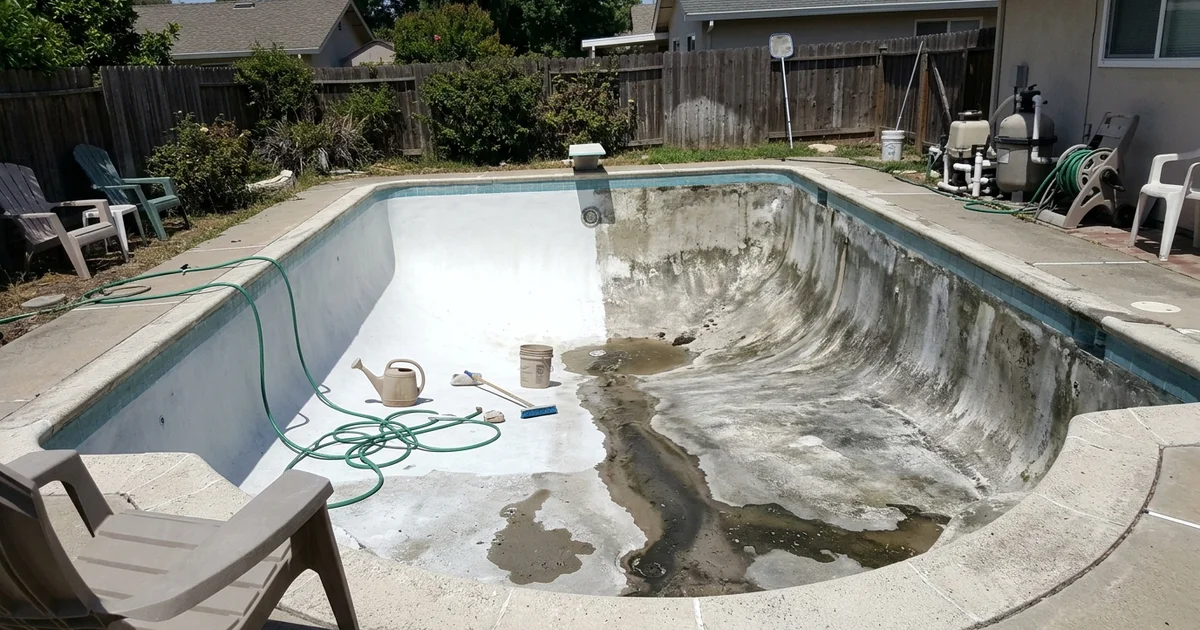
The pool acid wash process runs in five stages: inspect, drain, apply diluted acid, neutralize and rinse, then refill with a fresh chemical start-up. The wash itself usually takes a day or two. The refill is the variable, since it depends on your pool’s size.
Most homeowners worry about the draining part, and that’s fair. Once you know what happens at each step, it’s much less stressful.
Here’s how we handle pool acid washing from start to finish, including how long each stage takes.
Step 1: Inspection
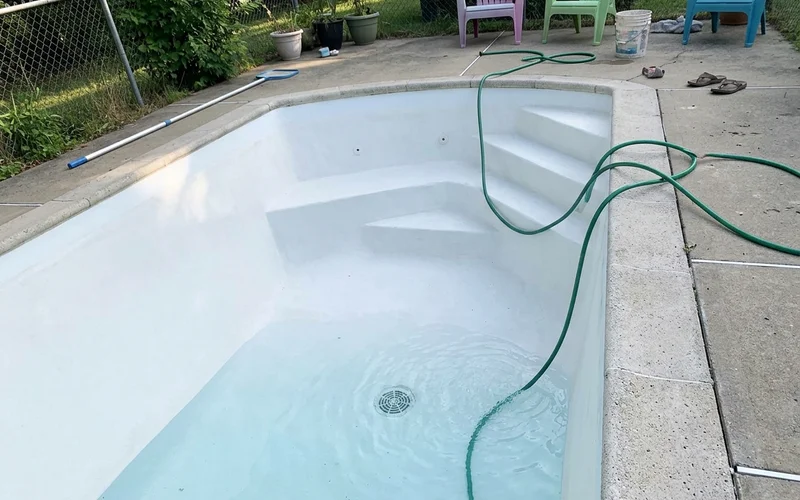
An acid wash is only the right call if your plaster can take it. Before anything else, we look at the stains and check the plaster’s condition and thickness. Pool plaster is usually only about 3/8 inch thick, and each wash removes a thin layer, so we don’t want to start with plaster that’s already worn.
If a chlorine wash or tile cleaning will do the job, we’ll say so. Many pros suggest acid washing no more than once every 3 to 5 years, and we’d rather save you a wash than sell you one.
Acid washing is also for plaster and gunite only. Muriatic acid damages vinyl liners and can dull fiberglass, so we confirm your surface type first.
Step 2: Draining
We drain the pool with a submersible pump, and the water goes only where local rules allow. California municipal pool-drainage fact sheets say it’s illegal to send chlorinated pool water to the storm drain. The same sheets say chlorine above 0.01 ppm harms aquatic life. Letting chlorine fade naturally takes roughly 3 to 5 days, or a dechlorinator speeds it up.
Pools shouldn’t sit empty for long. Groundwater can push up on an empty shell, which is called hydrostatic pressure, and sun can dry out and crack exposed plaster. In areas with a high water table, an empty pool can even lift out of the ground.
We plan the job so the pool is empty only as long as necessary. Tell us if your pool has a hydrostatic relief valve or if you’ve had heavy rain, because both change how we schedule the drain.
Step 3: Acid Application
We apply diluted muriatic acid to the walls and floor in sections, let it work briefly, and rinse it off. The goal is to remove only a very thin layer of plaster along with the stains. Timing matters here, since acid left on too long leaves a rough, sandpaper-like finish that feels bad underfoot and holds onto algae.
Heavily stained areas may need extra attention. We work them section by section instead of leaving acid sitting on the whole pool.
Safety precautions
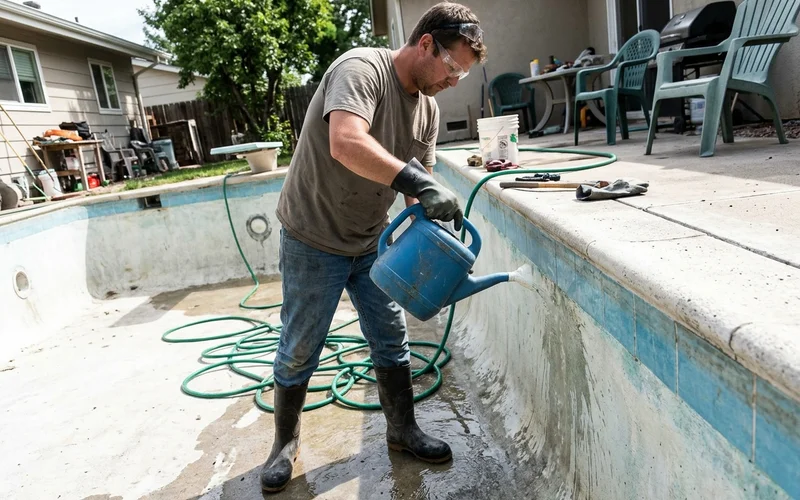
Our techs wear protective boots, gloves, eye protection and respiratory protection. Acid is diluted and applied carefully, and the work area is kept clear of people and pets.
Step 4: Neutralization, Rinse and Cleanup
Acid residue collects at the deep end, so we neutralize it with soda ash right away. Pool-industry guides typically call for about 2 pounds of soda ash per gallon of acid used. They also say to keep adding it until the pH reads neutral, between 6.0 and 8.0.
From there, the cleanup goes like this:
- Remove the neutralized sludge from the deep end.
- Rinse the walls and floor of the shell.
- Check that no acid residue is left on the plaster.
This protects your plaster. It also keeps acid out of places it shouldn’t go.
Step 5: Refill and Start-Up Chemistry
We refill the pool and start the chemistry from scratch. That means balancing pH, alkalinity and calcium, adding stabilizer and bringing chlorine into range. Fresh, freshly exposed plaster is more porous than old plaster, so proper start-up chemistry helps it stay bright instead of staining again.
We begin the chemistry during the fill and finish it once the pool is full. You’ll get clear instructions on when it’s safe to swim.
Typical Timeline
So, how long does a pool acid wash take? Most residential pools take about one day for the wash itself, and the refill is the part that varies. Here’s how each stage breaks down:
| Stage | Typical time |
|---|---|
| Inspection and estimate | Before the job |
| Draining | Several hours, depending on size |
| Acid wash, neutralize, clean up | About 1 to 2 days total with draining |
| Refill | Depends on volume and water pressure |
| Start-up chemistry | During and after refill |
Our guide on pool acid wash cost in California covers pricing.
If you’re planning ahead, winter is an especially good time to schedule, since the pool isn’t in use. Give us a call and we’ll walk through these acid wash pool steps for your pool and set a date that works for you.