What Is Pool Tile Cleaning?
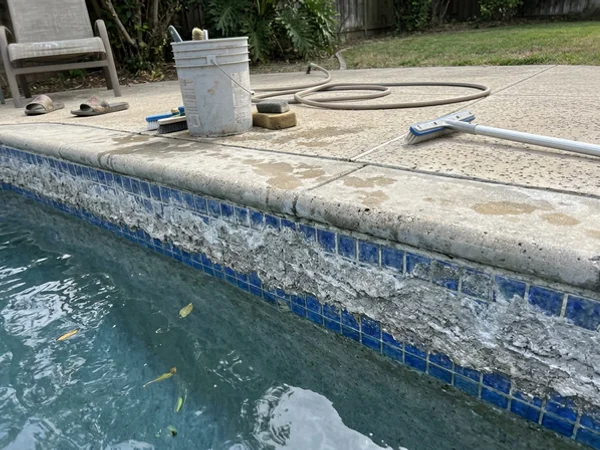
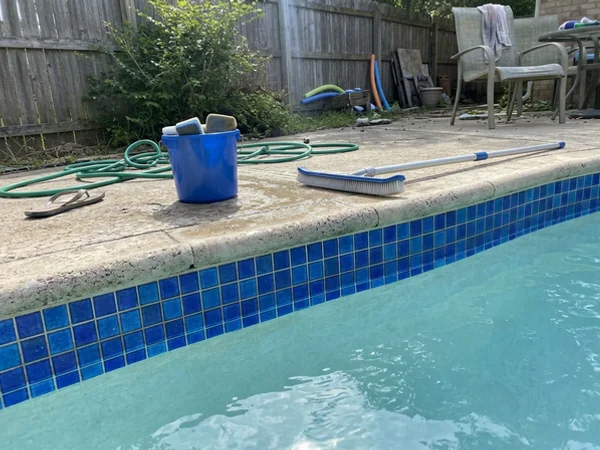
Ever notice a white or gray crust creeping along your waterline? That’s what pool tile cleaning removes, along with the algae and dirt hiding in your grout.
In Anaheim and the rest of North Orange County, that crust is almost always calcium scale. Our tap water carries a lot of dissolved minerals, much of it Metropolitan Water District imported water. Every time the pool evaporates and gets topped off, the minerals stay behind.
Over months and years, they collect where the water meets the tile and form a hard scale line.
A brush and retail tile cleaners handle light deposits, but they rarely touch established scale. That’s where we come in. We start by figuring out exactly what you have.
| Deposit | What it looks like | How it reacts to acid |
|---|---|---|
| Calcium carbonate | White and flaky | Fizzes on contact |
| Calcium silicate | Hard, glassy, often gray-white | No reaction |
| Efflorescence | White bloom seeping from the grout | Varies, so we check the source |
Calcium silicate takes a different method and a lot more patience. Efflorescence is the look-alike that fools most people. Getting the diagnosis right keeps the job efficient and your tile safe.
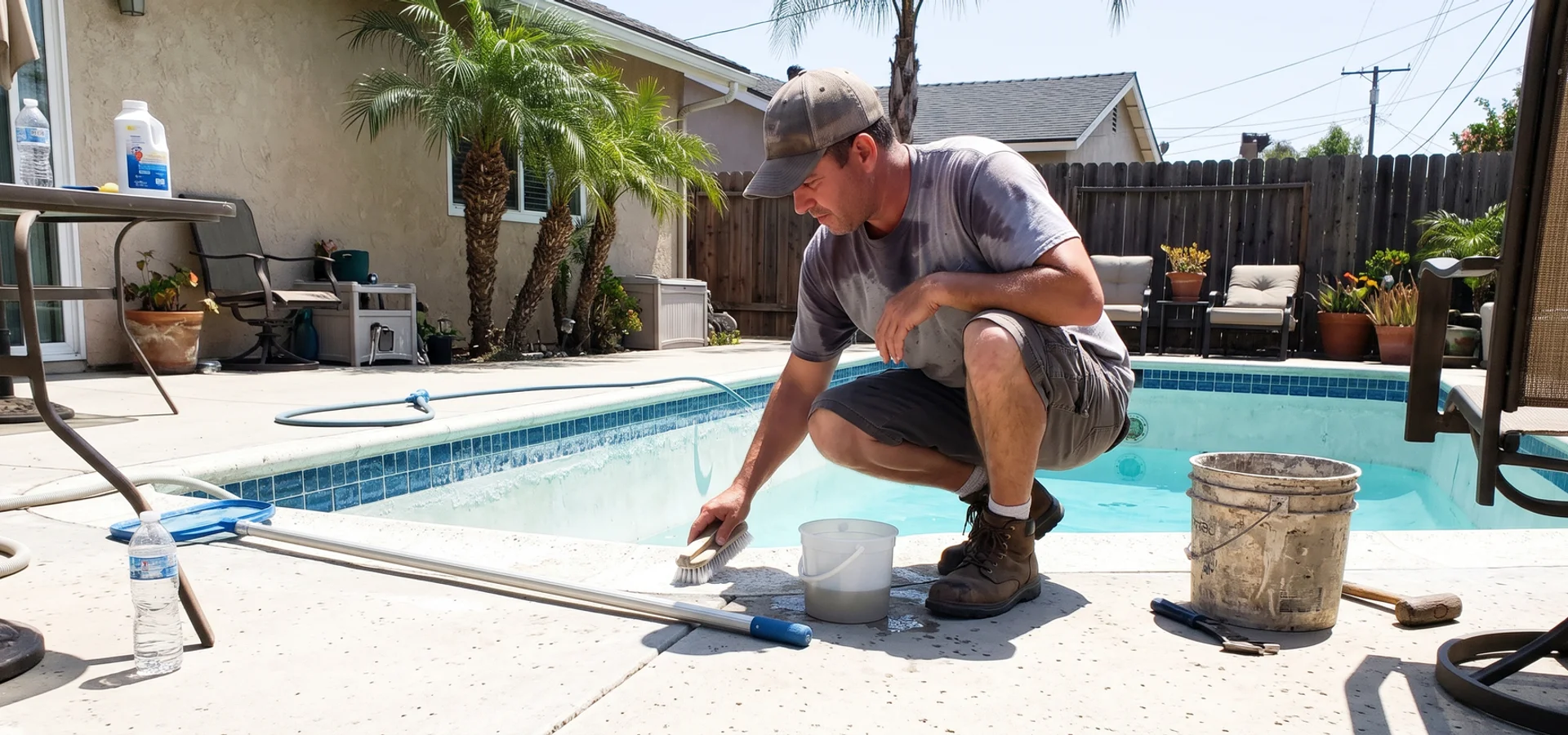
Next, we check the tile itself. Glass and porcelain mosaic tile behave differently under pressure washing, and older grout can be fragile. We test a small area first, then clean the full waterline with the method and pressure that suit your tile.
While we’re there, we look for broken, chipped or missing tiles and replace them. The finished waterline should look right, not just clean.
The last step is prevention. Scale forms when the water is oversaturated with calcium, which pool pros measure with the Langelier Saturation Index (LSI). Most pool industry guides call an LSI between -0.3 and +0.3 balanced.
Several things push the number toward scale:
- High pH
- High calcium hardness
- High total dissolved solids (TDS)
- Warm water
Many guides put calcium hardness at 250 to 350 ppm for plaster pools and warn that scale gets much more likely once it climbs past 400 ppm. We rebalance after the job and show you the targets that slow the scale line from coming back.
Common Problems We Solve
A white crust that won’t brush off
That’s established calcium scale. Our guide on the white crust on pool tile explains how to tell carbonate from silicate and why it matters.
Dark lines and algae in the grout
Algae loves rough grout lines, especially on the shady side of the pool. We clean the grout and adjust your chemistry so it doesn’t move right back in.
Loose, cracked or missing tiles
Tiles pop off when water gets behind them or the bond fails with age. A missing tile leaves a sharp edge and lets water reach the bond beam, so it’s worth fixing quickly.
Scale that keeps coming back
If your tile scales up again within months, your water chemistry is pushing calcium out of solution. Regular weekly service with balanced pH and calcium slows it noticeably.
Want the full story? Read more about why Orange County hard water leaves scale on tile.
When Is It Time to Clean Your Pool Tile?
If you can see a white band at the waterline from across the yard, it’s time. Other signs include:
- Grout that’s turned dark
- Tiles that feel rough or sharp
- Scale that has spread to the spa spillway or a water feature
Cleaning earlier is faster and cheaper than waiting until the scale is thick. It’s also far less work than retiling.
Whether it’s your backyard pool or a commercial property, call or message us. We’ll take a look at your waterline and tell you straight what it needs.