
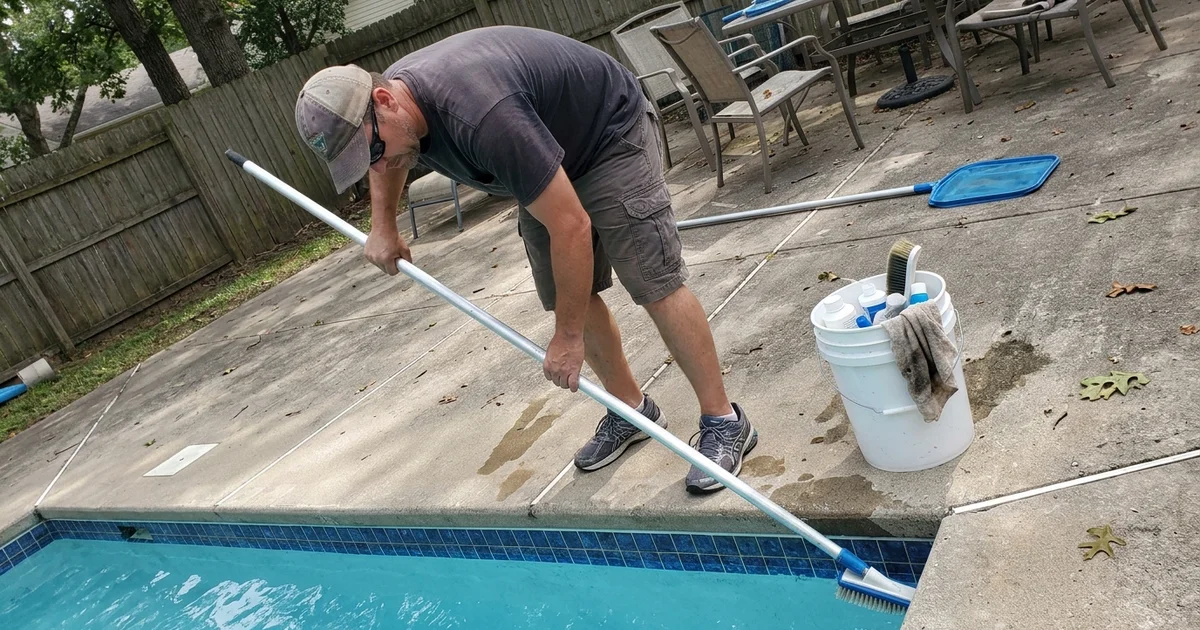
Pool tile needs two kinds of cleaning: a light brushing every week and a deeper calcium removal every so often. In North Orange County’s hard water, most pools need that deeper pool tile cleaning every year or two.
If you’ve wondered how often to clean pool tile, that range is the honest answer. Where your pool lands in it depends on water chemistry, evaporation, whether you run a salt system and how consistently the tile line gets brushed.
Local tap water is part of the story. Anaheim’s water runs roughly 8 to 12 grains per gallon of hardness, depending on the report and the source.
Here’s how we break it down below: what to do weekly, what drives scale, and the signs it’s time for a pro.
Routine Brushing vs Periodic Deep Cleaning
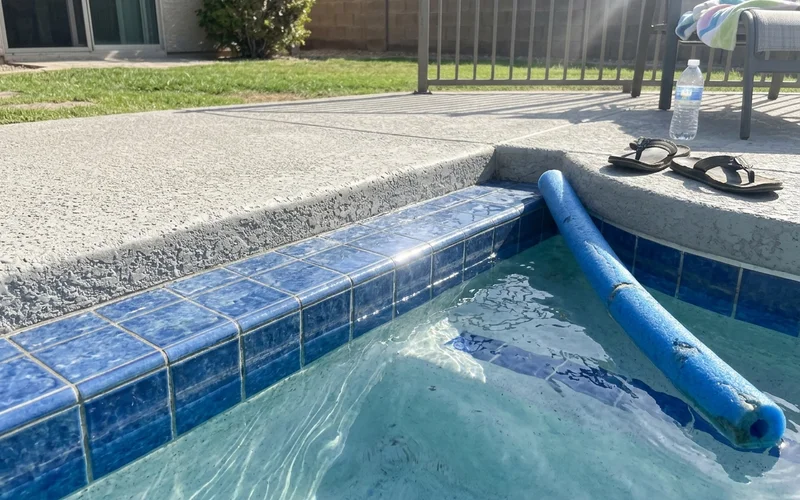
Brush the tile line weekly and plan a deep calcium removal every 1 to 2 years. Think of pool tile maintenance as two jobs: the weekly one keeps scale from setting, and the deep one fixes whatever got past it.
| Type of cleaning | How often | What it does |
|---|---|---|
| Tile line brushing | Weekly | Removes mineral film, body oils and early algae before they harden |
| Spot cleaning | As needed | Handles small areas of buildup |
| Deep calcium removal | Every 1 to 2 years for many local pools | Removes established scale and cleans grout |
Weekly brushing is part of a normal service visit. Our guide on how often a pool should be serviced explains why weekly is the local default.
This waterline cleaning frequency matters more than most people expect. Wiping the tile line before deposits harden is far easier than chipping at them later.
Hard Water and Evaporation
The biggest factor in how fast tile scales is how much new calcium enters the pool. In inland Southern California, pools lose a lot of water to evaporation, and every top-off with hard tap water adds minerals. A pool with a waterfall, a spillover spa or full afternoon sun evaporates even faster.
Pool industry sources put typical loss at 1 to 2 inches a week. A heated pool in a dry, windy spot can lose 3 to 4 inches. That water leaves, but the calcium stays behind and builds up.
The faster you top off, the faster you scale
Pools that need frequent refills tend to need tile cleaning more often. A pool cover and fixing any leaks both help.
A solid or solar cover can cut evaporation by 70% to 95%, depending on the type. Fewer refills means less new calcium in your water.
Chemistry Control Slows Scale
The water’s balance decides whether calcium stays dissolved or lands on your tile. Keeping these in range makes a real difference:
- pH: the biggest factor; high pH drives scale. The target is 7.2 to 7.6.
- Total alkalinity: high alkalinity keeps pushing pH up. Aim for 80 to 120 ppm.
- Calcium hardness: the more calcium, the more scale potential. Plaster pools usually sit between 200 and 400 ppm.
- Salt systems: they raise pH, so salt pools need extra attention
Consistent weekly balancing can stretch the time between deep cleanings noticeably.
Here’s a pro tip we pass along to customers. If your calcium hardness already sits at the top of its range, even a slightly high pH will scale your tile fast. Test all three numbers together, not just pH.
Signs It’s Time for Restoration
Book a deep tile cleaning when you notice:
- A visible white or gray band you can see from across the yard
- Scale that doesn’t come off with a tile brush
- Rough, sharp-feeling tile at the waterline
- Dark grout lines or algae in the grout
- Scale spreading onto spa spillways or water features
- Loose or missing tiles
Catching scale early is easier and cheaper. Thin carbonate scale comes off quickly, while years of buildup can harden into tougher deposits that take much more time.
Not sure which category your tile falls into? Send us a photo or ask us at your next weekly visit, and we’ll tell you whether a brush will do or it’s time to schedule a deep cleaning.