
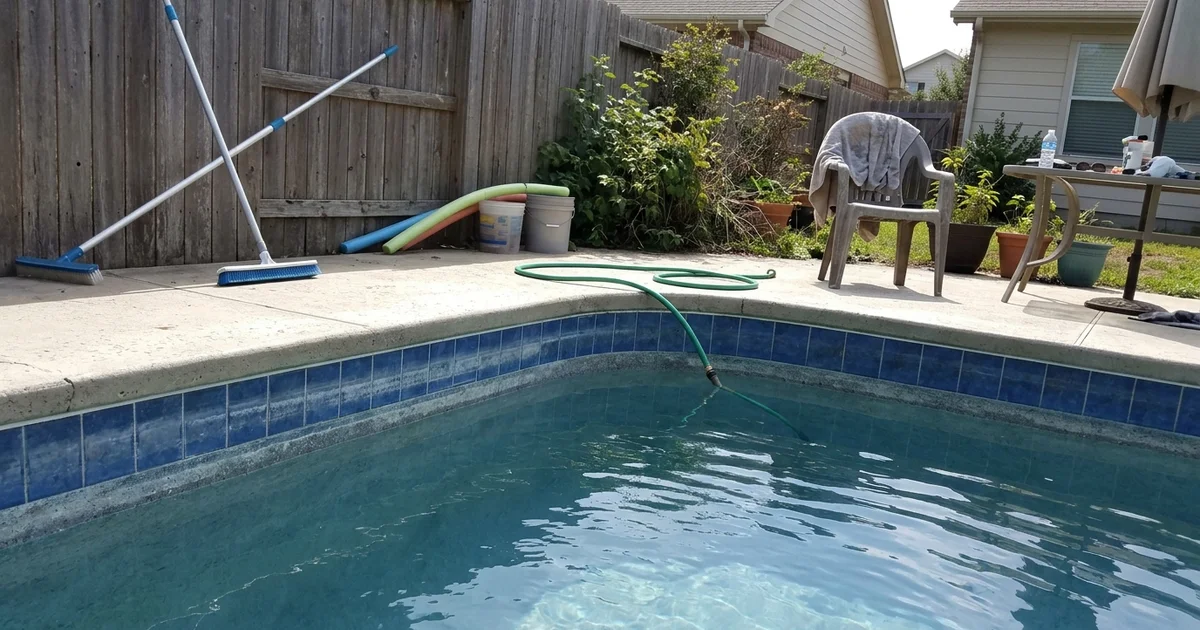
Usually not. For most waterline tile cleaning, we only lower the water a few inches so the full scale band is exposed.
A complete drain is only needed in specific cases, like deep scale far below the waterline or tile replacement under water. Here’s how the process works when we handle pool tile cleaning.
Most guides put the typical drawdown at about 2 to 4 inches below the tile line, and 6 to 12 inches for heavier buildup. That gives you a dry, reachable surface without wasting hundreds of gallons.
Partial Lowering vs Full Drain
Partial lowering is the default, and a full drain is the exception. This table shows how the two compare.
| Approach | When it’s used | Typical impact |
|---|---|---|
| Lower a few inches (about 2 to 4) | Most waterline scale cleaning | Small amount of water, quick refill |
| Lower further (about 6 to 12) | Scale that extends lower on the wall | More water, longer refill |
| Full drain | Deep scale below the waterline, tile replacement under water, combined acid wash | Full refill and start-up chemistry |
Lowering the water a few inches is quick and uses little water. It also lets us reach the entire scale line, including the bottom edge where it’s often thickest.
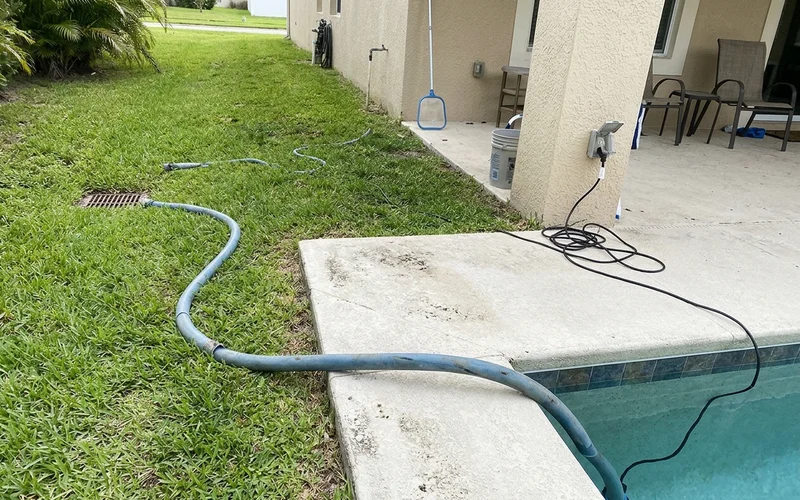
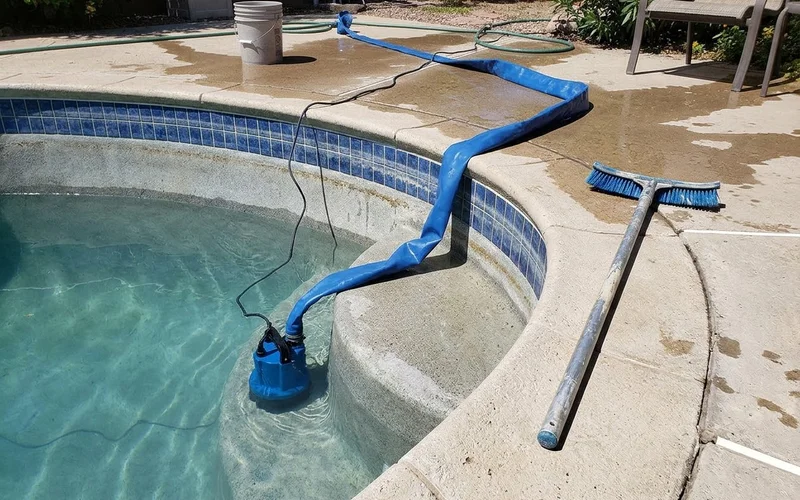
This is how we lower pool water for tile cleaning on most Anaheim jobs. A small submersible pump does the work, and the hose runs to a yard drain.
When a Full Drain Is Needed
A full or near-full drain makes sense in a few situations:
- Scale extends well down the wall, below the tile band
- Tiles below the waterline need replacing
- You’re combining tile cleaning with an acid wash or plaster work
- The water itself has very high calcium or TDS and would benefit from a fresh start
Draining a pool has its own considerations, like keeping it empty only as long as needed. Our guide to the pool acid wash process covers draining and refilling in detail.
Water-wise tip
If calcium hardness and dissolved solids are already very high, the partial refill after tile cleaning brings in fresh water and can help bring them down a little. Most pool pros aim for calcium hardness between 200 and 400 ppm, and Anaheim tap water has been reported at roughly 150 ppm of hardness, so fresh fill water tends to dilute rather than add to the problem.
Refill and Rebalance Afterward
After cleaning, we refill to the normal level and rebalance. Fresh tap water changes pH, alkalinity and calcium, and the pool may need chlorine and stabilizer adjusted.
This is also when we set chemistry targets that slow scale from coming back. Industry guidance for balanced water is a pH of 7.2 to 7.6 and total alkalinity of 80 to 125 ppm. Keeping pH in that range matters most, because drifting high is what pushes calcium out of the water and onto your tile.
Typical Duration
Most residential tile cleaning jobs take part of a day once the water is lowered. A few things add time:
- Thick calcium silicate scale
- A spa or spillway with extra tile
- Water features with tile surfaces
- Tile repair or replacement
- A full drain and refill
Refill time depends on your pool’s volume and your water pressure. We’ll give you a realistic timeline with your estimate so you know how long the pool will be out of use.
In most cases, you’ll be swimming again the same day or the next. Ready to get your tile sparkling again? Reach out for an estimate and we’ll tell you up front whether a few inches or a full drain makes sense for your pool.