
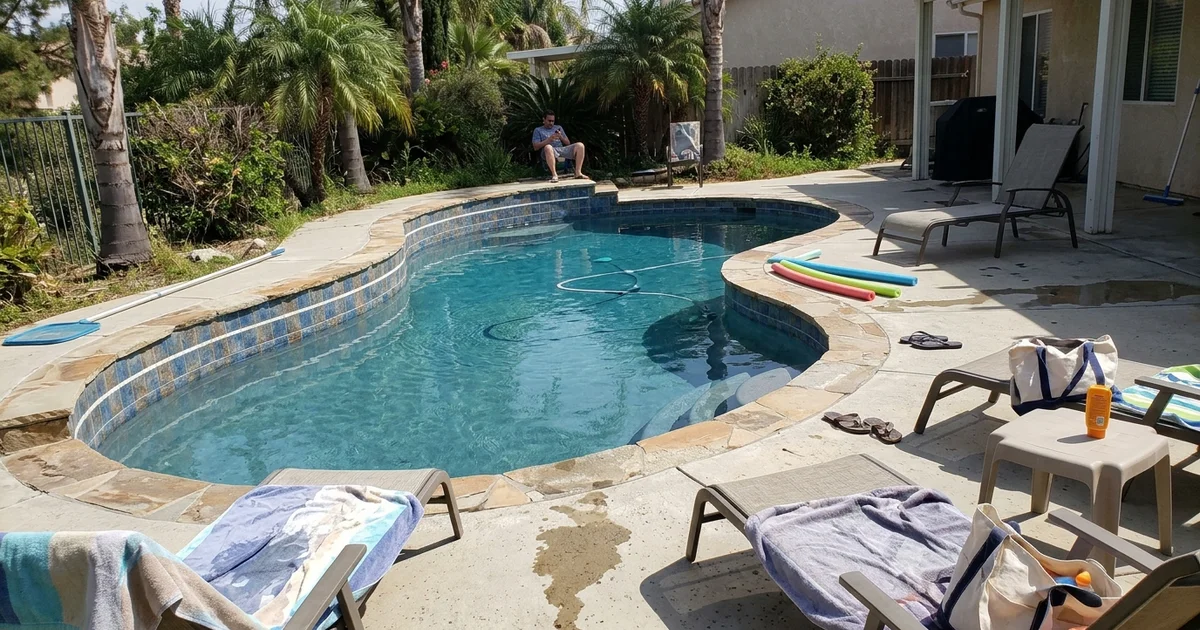
Pool tile cleaning cost in California usually runs about $300 to $900 for a typical residential pool. That’s our rough market estimate, not a price list.
Spas, heavy silicate scale and tile repairs push the number higher. The biggest swing factors are how many linear feet of tile you have, what type of scale is on it, and whether the water has to be lowered.
Published pricing guides commonly put professional waterline blasting at about $4 to $10 per linear foot. At the $6 to $8 range often quoted for moderate deposits, 100 feet of waterline tile lands around $600 to $800.
We quote pool tile cleaning after a free look at your tile. This page explains what moves the price, when retiling makes more sense, and how to get a firm number.
What Drives the Cost
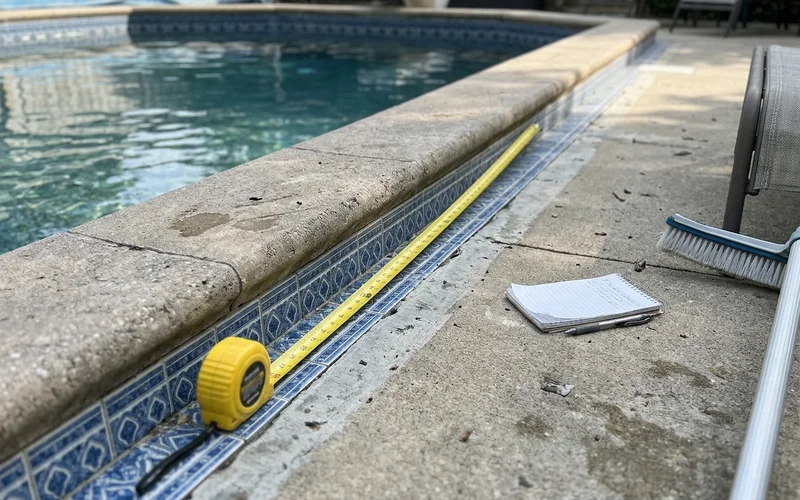
Linear feet of tile and scale type drive most of the price. Southern California’s hard tap water and fast evaporation leave minerals at the waterline, so the buildup often looks worse than homeowners expect.
| Cost driver | How it affects the price |
|---|---|
| Linear feet of tile | More tile, more time |
| Scale type | Silicate takes longer than carbonate |
| Scale severity | Thick, years-old buildup takes more passes |
| Method | Hand work, pressure washing or blasting differ in time and setup |
| Water level | Lowering more water adds time and refill |
| Spa and water features | Extra tile, often heavily scaled |
| Tile replacement | Broken or missing tiles add parts and labor |
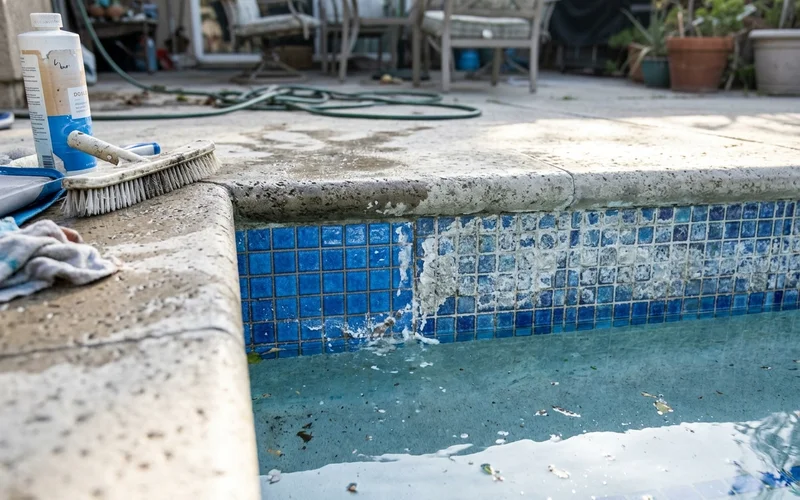
Scale type is the one most people miss. Carbonate is the white, flaky kind that fizzes and dissolves in mild acid. Silicate is the hard, gray or white, sandpaper-like kind that acid won’t touch, so it usually needs mechanical removal such as glass bead blasting.
That difference is why calcium removal cost on a pool can vary so much between two homes with similar-looking tile. Our guide on the white crust on pool tile explains carbonate vs silicate in more detail.
Cleaning vs Retiling
Cleaning costs far less than retiling when your tile is intact and just scaled. Retiling means removing old tile, preparing the bond beam and setting new tile, and that typically runs into the thousands of dollars.
Retiling makes sense in a few situations:
- Tiles are widely cracked
- Tiles are falling off
- The surface is badly worn
- You want a new look during a remodel
Clean early, save money
Thin scale comes off quickly. Waiting years lets it harden and thicken, which turns a short job into a long one.
Typical Jobs, From Least to Most Expensive
A light carbonate job on a small pool costs the least, and cleaning plus tile replacement costs the most. Here’s the usual order:
- Light carbonate scale on a small pool: quickest job, usually near the low end of the per-foot range
- Moderate scale on an average backyard pool: most common
- Pool plus spa and spillway: more tile, more time
- Heavy silicate scale: slower mechanical removal
- Cleaning plus tile replacement: adds materials and cure time
All of these are estimates. Your cost depends on your pool and what we find.
Getting an Accurate Quote
A free inspection is the quickest way to a real pool tile cleaning price. We measure the tile line, identify the scale, check tile and grout, and give you a written quote that spells out what’s included.
Sometimes your tile only needs a light cleaning and better water chemistry. We’ll tell you if that’s the case, even when it means a smaller job.
Request a free estimate and we’ll get you a clear number for your pool.