
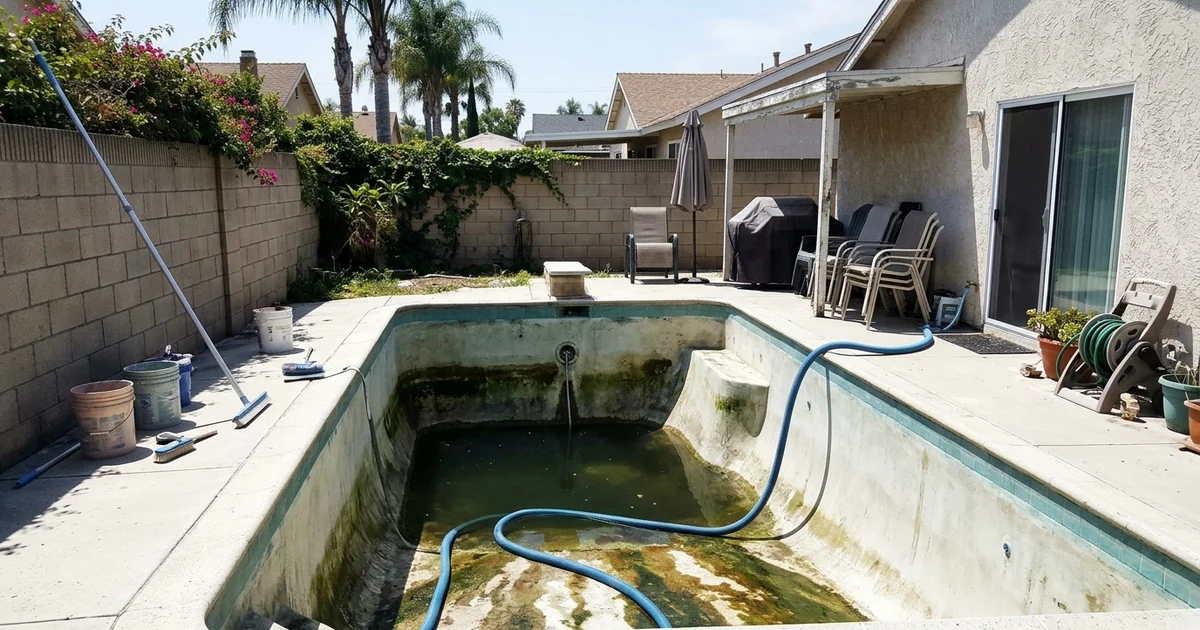
The right wash depends on what’s staining your plaster. In the acid wash vs chlorine wash pool debate, a chlorine wash removes organic stains like leaves and algae. An acid wash removes mineral stains and deeply rooted algae by taking off a thin layer of plaster.
Matching the treatment to the stain saves plaster you don’t need to lose. Pool pros put the cost at about 1/16 inch of plaster per acid wash, and most plaster only starts around half an inch thick.
We sort this out on every inspection before recommending pool acid washing. Below, we cover how to tell your stains apart, when a chlorine wash is enough, and when acid is the only thing that will work.
Mineral vs Organic Stains
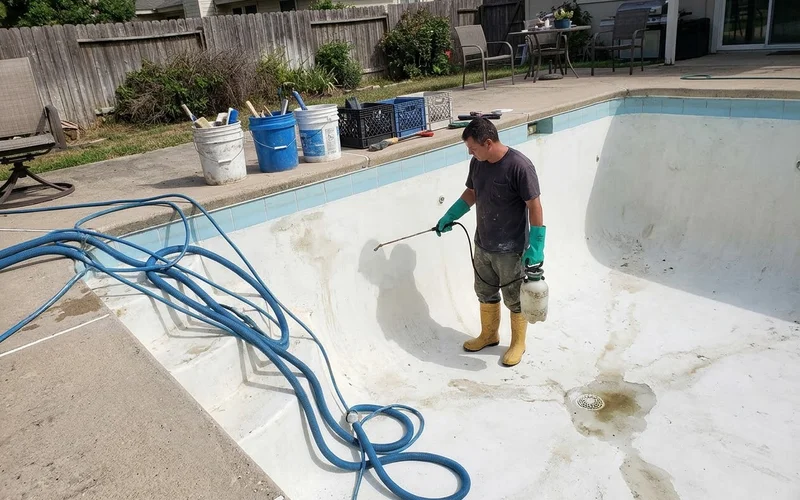
Organic stains come from things that grew or fell into the pool. Mineral stains come from metals and calcium in the water or equipment. The look and color usually tell you which one you have.
| Stain type | Common causes | Typical look |
|---|---|---|
| Organic | Leaves, algae, dirt, berries | Green, brown or black, often under debris |
| Mineral | Calcium, iron, copper, other metals | Gray, rust, blue-green or brown |
| Black algae | Algae rooted in plaster | Dark spots that return after brushing |
A simple two-step test helps before anyone books a wash:
- Organic check: Hold a chlorine tablet against the stain for about 30 seconds. Wear gloves. If the stain fades, it’s likely organic.
- Mineral check: If chlorine does nothing, press crushed vitamin C (ascorbic acid) or a little acid on the spot. If it lightens, it’s likely mineral.
Test a few spots, not just one. Pools often have both kinds of stains in different areas.
When a Chlorine Wash Is Enough
A chlorine wash is enough when your stains are organic and your plaster is in decent shape. It uses a strong chlorine solution on the drained plaster, brushed in and rinsed off. It’s a good choice when:
- Stains come from leaves, algae or other organic material
- The pool sat green and left algae stains behind
- Plaster is thin or delicate and shouldn’t lose more finish
Because it doesn’t dissolve the surface, a chlorine wash is gentler on plaster. Many pools that recover from green water only need this. Our guide on why pools turn green covers algae recovery.
Try gentle first
If a stain is organic, we start with chlorine. Acid is for the stains chlorine can’t touch.
When Acid Is Required
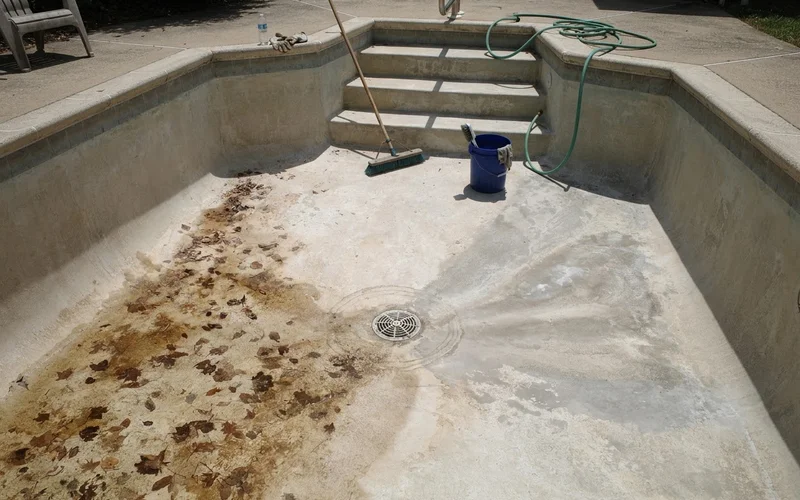
You need an acid wash when the stain is in the plaster itself, not sitting on top of it. Acid strips a thin layer of surface, and the stain comes off with it. An acid wash is needed when:
- Mineral or metal stains are set into the plaster
- Black algae is rooted and keeps returning
- The plaster looks dull and blotchy from years of chemistry swings
- A chlorine wash didn’t remove the staining
Plaster can only take so many of these. Most pool pros recommend spacing acid washes at least 3 to 5 years apart, and standard white plaster usually handles just a few over its lifetime.
If your pool was acid washed recently, tell us. We may suggest a different fix, or a lighter touch on only the worst areas.
Combined Treatments
Yes, you can do both in one visit. Since the pool is drained either way, it can make sense to do a chlorine treatment for organic stains and a light acid wash for mineral areas in the same job.
This keeps acid on only the spots that need it. It also saves you a second drain and refill.
Not Sure Which One You Need?
An inspection answers that. We look at the stains, test them and check the plaster’s condition. Then we recommend the gentlest treatment that will actually work.
Request a free estimate and we’ll take a look.