
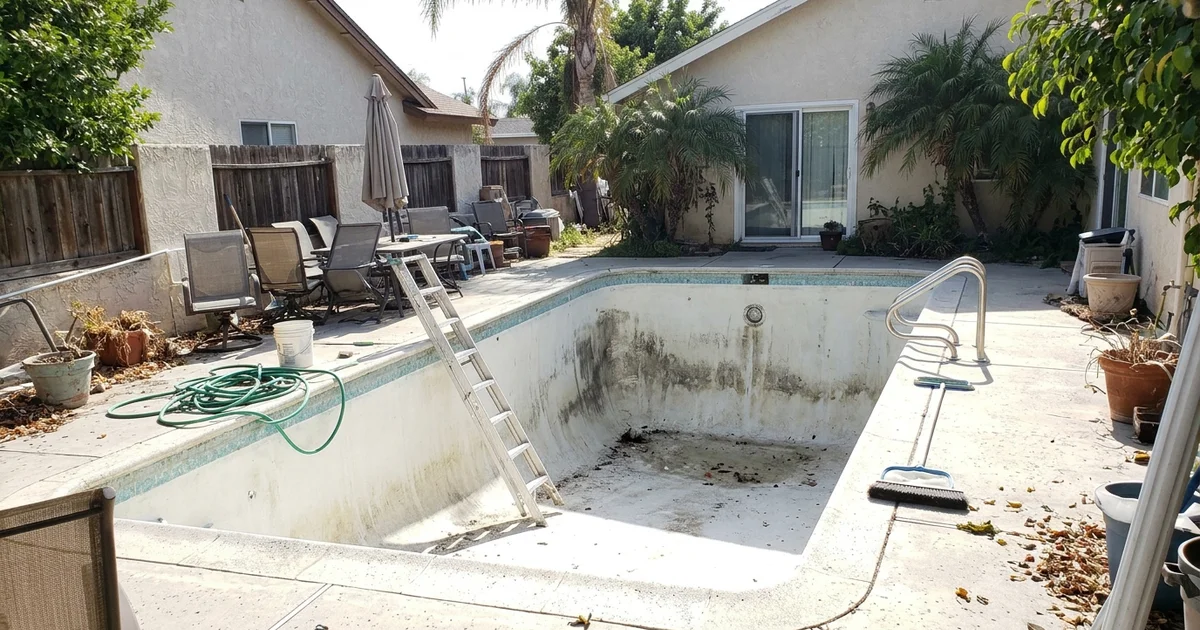
Acid washing isn’t bad for plaster when it’s done for the right reason, by someone who knows how far to go. But every wash removes a thin layer of finish, and plaster doesn’t grow back.
That’s the honest trade-off. An acid wash is the right tool for stains set into the surface. It’s the wrong tool for stains a gentler method can lift. We weigh that before recommending any pool acid washing.
If you’re wondering how often you can acid wash a pool, the short answer is not often. Pool pros commonly cap it at once every 3 to 5 years, and only when stains call for it.
How Much Finish Each Wash Removes
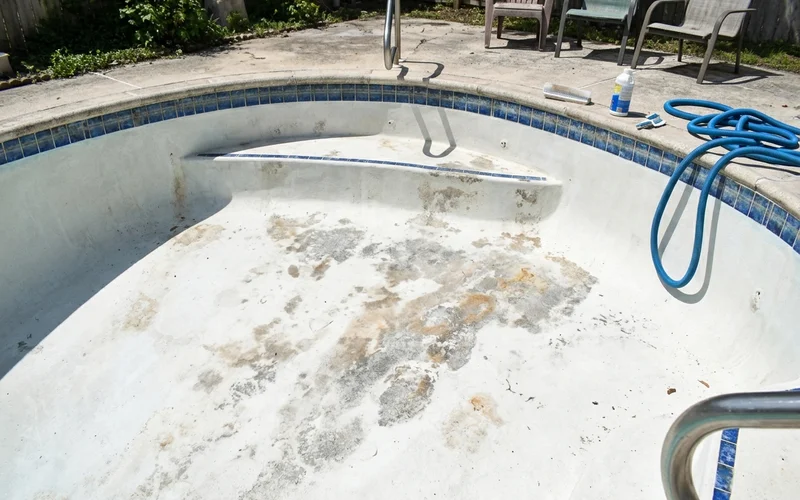
A single acid wash typically removes about one-sixteenth of an inch of plaster, according to figures pool pros commonly cite. That sounds tiny. But it adds up fast on a finish that’s only a fraction of an inch thick.
A careful wash takes off as little as possible. An aggressive or repeated wash takes off more. Most plaster finishes can only handle a handful of acid washes in their lifetime before they’re too thin, which is why we keep the count low.
| Plaster condition | Acid wash outlook |
|---|---|
| Thick, smooth, stained | Good candidate |
| Moderately worn, stained | Possible with a light wash |
| Thin, rough or etched | Poor candidate; consider resurfacing |
| Previously acid washed several times | Proceed with caution or skip |
Surfaces That Need Extra Care
Some finishes forgive acid far less than standard white plaster. Here’s what we watch for:
- Pebble and exposed-aggregate finishes: the cement between stones can be eaten away, loosening pebbles. Owners on the Trouble Free Pool forum regularly report pebble loss after an acid wash that ran too long.
- Colored plaster: acid can lighten or blotch the color.
- Older plaster: often already thinner from years of use and past washes.
An acid wash on a pebble pool is the one that worries us most. Pebble finishes are blended to handle an occasional acid treatment, but pool pros treat it as a last resort. For these surfaces, we use a lighter approach or suggest an alternative.
When gentler is better
Leaf stains and algae are organic and often come out with a chlorine wash, which doesn’t remove finish. Our guide on acid wash vs chlorine wash explains how to choose.
Risks of DIY Acid Washing
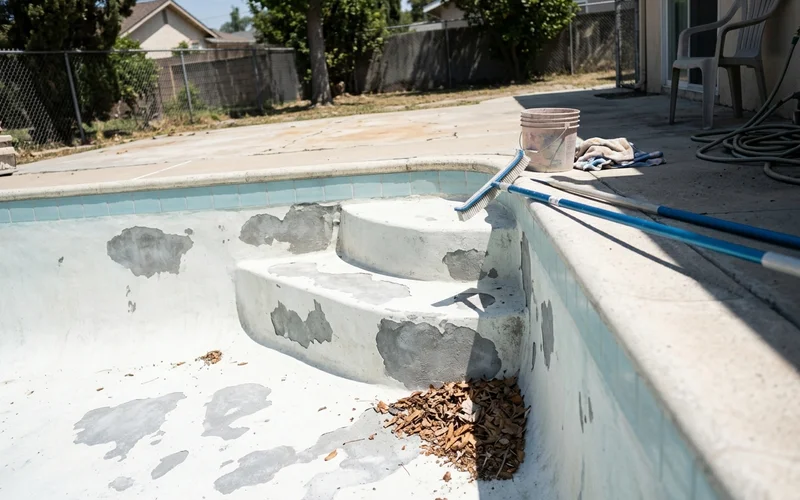
Acid washing looks simple on video, but it’s risky. Muriatic acid is harsh, and mistakes show up as permanent damage.
- Toxic fumes from muriatic acid in an enclosed pool shell
- Over-etching that strips too much plaster or leaves streaks
- Equipment damage if acid reaches pumps, heaters or metal fittings
- Improper neutralization and runoff that can harm landscaping and violate local rules
That last one trips up a lot of homeowners. California guidance says water discharged from a pool should be free of acid and land between pH 6.5 and 8.5, so spent acid has to be neutralized (usually with soda ash) and tested first. Local rules vary by city, so we follow Anaheim’s requirements on every job.
Signs Your Pool Is a Good Candidate
You don’t need to guess. These signs point toward an acid wash:
- Mineral stains or discoloration that brushing and chemistry can’t remove
- Black algae rooted into the plaster
- Overall dull, blotchy appearance on plaster that’s still thick
- Stains that remain after a chlorine wash
We’ll inspect your plaster and tell you honestly whether an acid wash, a chlorine wash or neither makes sense. Reach out to schedule an inspection before you buy acid or drain anything.