
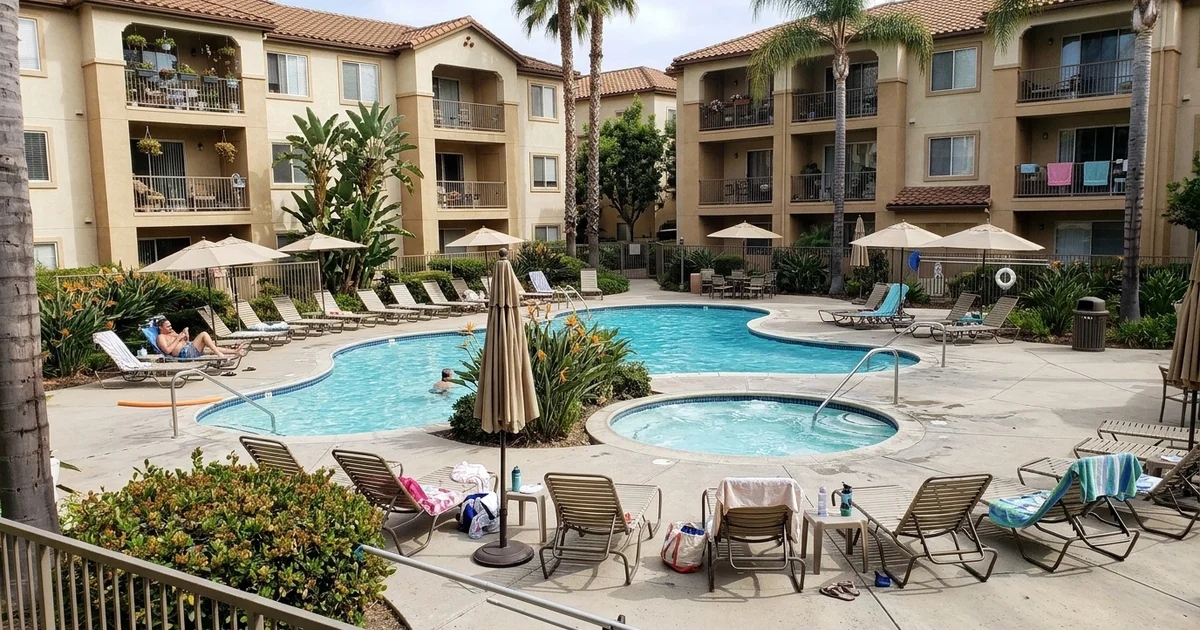
Commercial pool maintenance cost in Southern California usually comes as a flat monthly contract. Most HOA and apartment pools land between $500 and $1,500 a month, according to 2026 pool-industry pricing guides. Busy, large or multi-body properties sit at the high end, and some go past it.
For comparison, a typical backyard pool in Los Angeles runs about $190 to $255 a month. Commercial pools cost more because they hold more water, see more swimmers and answer to county health inspectors.
Treat those numbers as a ballpark, not a quote. We offer a free site assessment and a written proposal for commercial pool service. From there, you’ll see what your own pools and spas cost, line by line.
What Drives the Cost
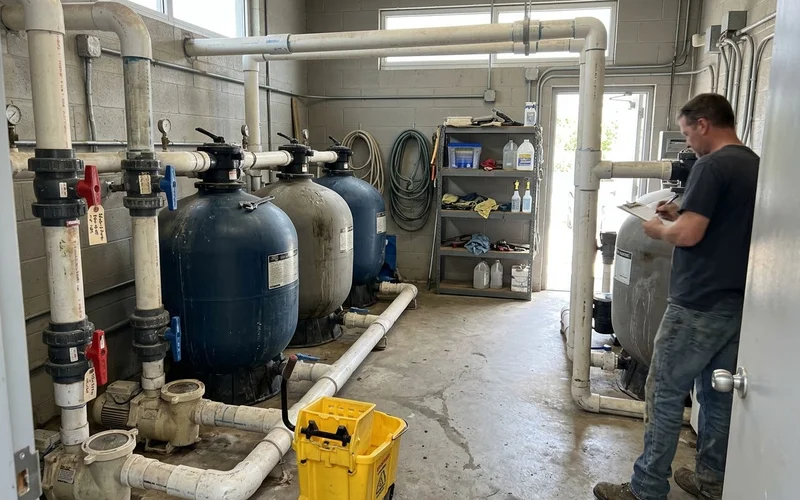
Bather load and visit frequency swing the price more than anything else. A quiet 12-unit complex and a 300-unit community with a spa and a splash pad are very different jobs, even if both say “one pool” on paper.
| Cost driver | How it affects price |
|---|---|
| Number of pools and spas | Each body of water needs its own service |
| Volume | Larger pools need more chemicals and time |
| Bather load | Busier pools need more visits and sanitizer |
| Visit frequency | Summer schedules often run several visits a week |
| Chemicals included | All-inclusive is higher but more predictable |
| Site specifics | Equipment access, debris and travel time |
If you’re comparing HOA pool maintenance cost between two bids, check the chemicals line first. A low monthly number that leaves chemicals out often ends up costing more by August.
Compliance Tasks and Repairs
Commercial pools need more than cleaning, and that’s part of what you pay for. California public pools fall under the state Health and Safety Code (Sections 116025 through 116068) and Title 22 rules, and county environmental health offices, such as the Orange County Health Care Agency, enforce them.
Here’s what a good contract usually accounts for:
- Consistent service records you can show an inspector
- Checks on gates, signs and safety equipment
- Drain covers that meet the federal Virginia Graeme Baker Act standard (ASME/ANSI A112.19.8)
- Quick response when something fails
Repairs and equipment replacement are usually quoted separately. Most contracts set an agreed dollar amount, and anything above it needs your approval first.
Budget for the summer peak
Many properties set an annual budget based on a heavier summer schedule and a lighter winter one. Ask for both in the quote.
Contract vs Per-Visit Pricing
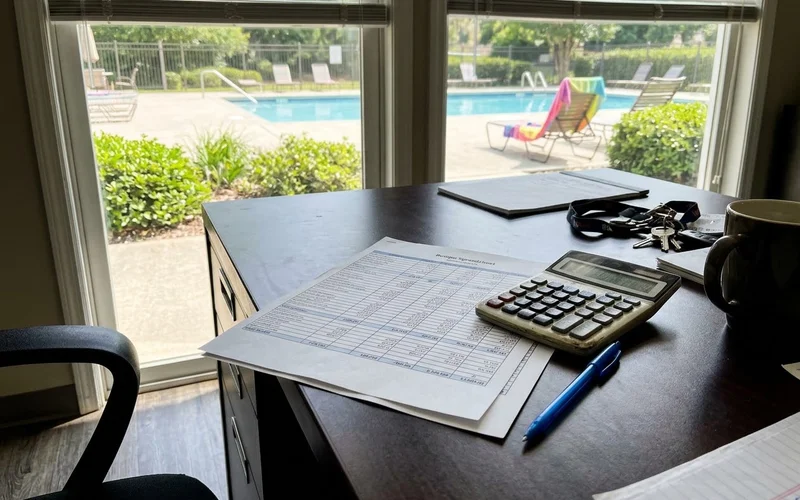
For ongoing maintenance, a monthly contract almost always works better. You get a set schedule, a predictable bill and priority response when something goes wrong.
| Approach | Pros | Cons |
|---|---|---|
| Monthly contract | Predictable, consistent schedule, priority response | Commitment |
| Per-visit | Flexible | Higher per-visit cost, no guaranteed schedule |
Per-visit pricing can make sense for a seasonal or rarely used pool. For apartment pool service cost, though, a contract keeps the water balanced and the records current. Our guide on commercial pool service frequency explains how visit count is set.
Budgeting for Equipment Replacement
Plan to replace commercial pumps roughly every 8 to 12 years, and sand filter media every 5 to 7 years, based on common equipment lifecycle guides. Heavy use and poor water balance can shorten both. A failed pump can close the pool, so planning ahead matters.
Many HOAs set aside reserves for this. California’s Davis-Stirling Act requires associations to complete a reserve study with a site inspection at least every three years and to review it every year.
A good service provider will tell you what’s aging, so you can plan instead of react. Ask your provider for:
- The age and condition of your pumps and filters
- Any heater or chlorinator nearing the end of its life
- A rough replacement cost for each, to feed into your reserve study
Getting a Quote
The fastest way to a real commercial pool maintenance cost in Southern California is a site assessment. We review your pools, spas, equipment, bather load and records, then give you a written proposal with visit frequency, inclusions and pricing.
It helps to have a few things ready: how many pools and spas you have, your busiest months and any recent service or repair records. Bring a copy of your last county inspection report if you have it.
Request a free assessment to get started.