
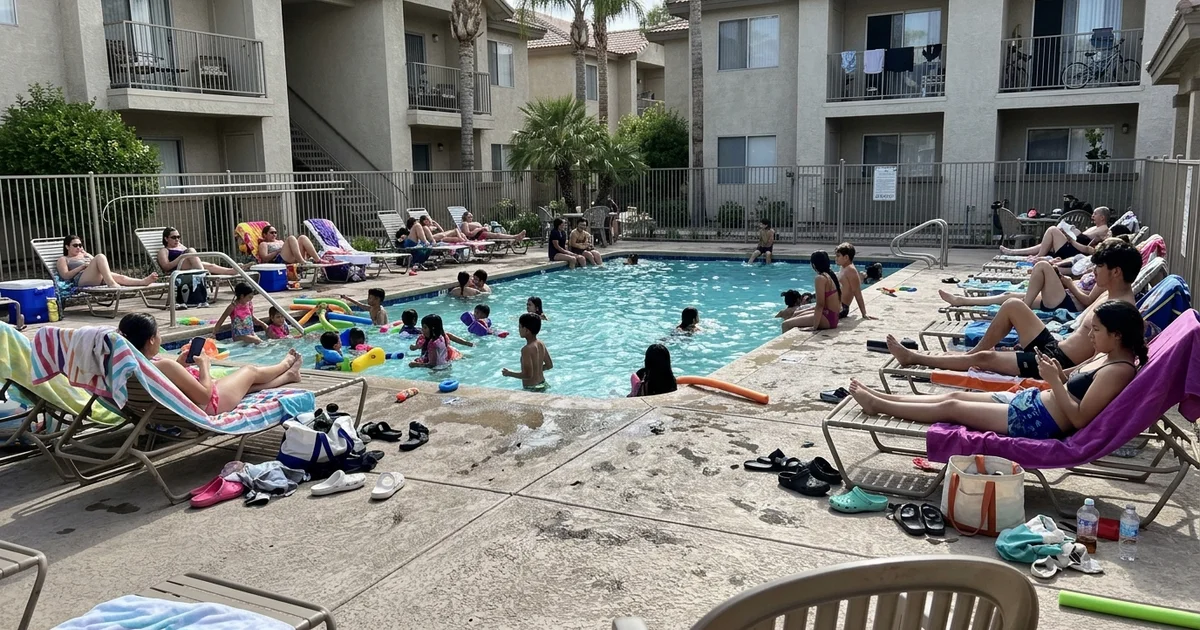
Most busy commercial and HOA pools need two to three professional service visits per week in summer, on top of the daily testing and logs the facility must keep. Bather load sets the number first. Pool volume, season and how well chemistry holds between visits adjust it from there.
That’s why we size every commercial pool service schedule to your pool instead of running a one-size route. For commercial pool service frequency, the readings decide.
The stakes are real. In a CDC review of 2013 inspection data from five states, including California, 12.3% of routine inspections ended in an immediate closure. Improper pH (15% of inspections) and low disinfectant (12%) were among the most common violations.
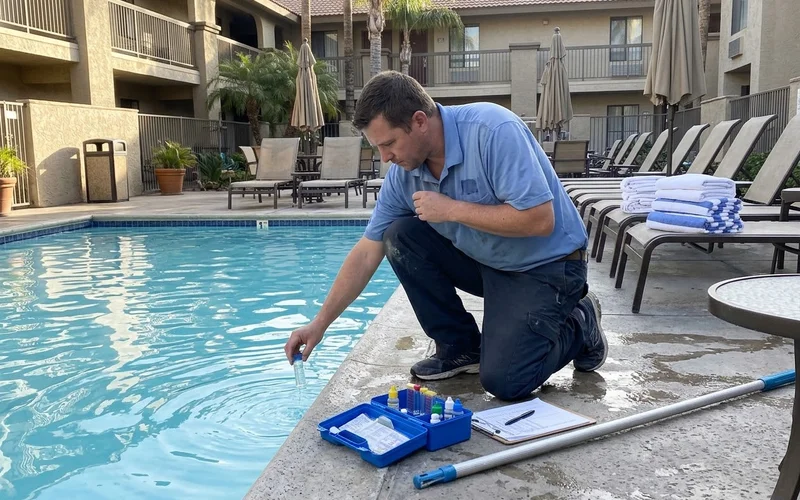
Bather Load Drives Everything
Bather load drives service frequency because every swimmer adds sweat, oils, sunscreen and bacteria. Those use up chlorine and create combined chlorine (chloramines), the cause of that strong chlorine smell and red eyes. The CDC’s Model Aquatic Health Code treats combined chlorine above 0.4 ppm as a sign you need to take corrective action.
A community pool on a hot weekend can see more swimmers in a day than a backyard pool sees in a month. The busier the pool, the faster chemistry drifts. That’s also why a typical HOA pool service schedule gets heavier as the weather warms up.
| Pool situation | Typical summer frequency |
|---|---|
| Small HOA pool, light use | 2 visits per week |
| Average HOA or apartment pool | 3 visits per week |
| Large or very busy pool, hotel pool | 3 or more, sometimes daily |
| Shared spa | As often as the pool, or more |
These are starting points. We adjust based on what the readings show.
Spas deserve the extra attention. They hold far less water per bather, so chemistry swings faster than it does in the main pool.
Seasonal Adjustments
Southern California pools stay open year-round, but use changes a lot. Summer gets the most visits, and winter usually gets the fewest.
- Summer: highest bather load, highest chlorine demand, most visits
- Spring and fall: moderate use, plus wind events and leaf drop
- Winter: lowest use, often fewer visits
Chlorine needs attention in every season. California’s Title 22 rules require at least 1.0 ppm free chlorine in a public pool without stabilizer, and a pool that drops below that must close until it’s corrected. A hot October weekend can eat through chlorine just like July, so we watch the readings, not the calendar.
Don’t cut too far in winter
Winter storms and Santa Ana winds can load a pool with debris. Reducing visits is fine, but stopping professional service entirely usually leads to a rough spring.
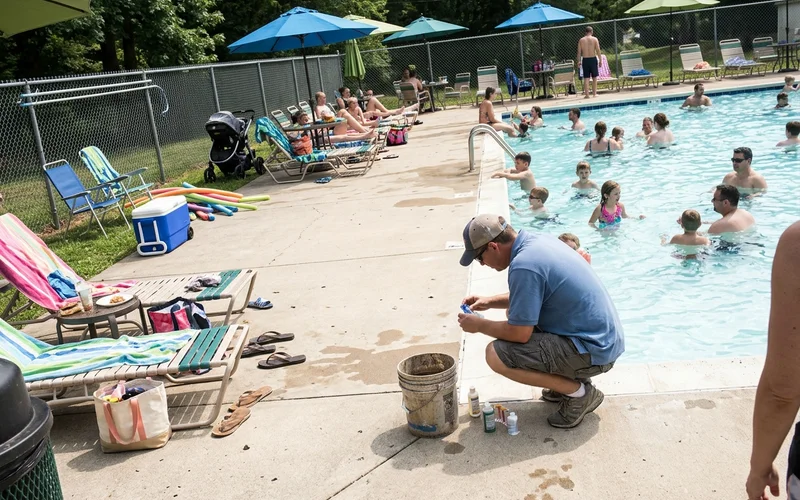
Daily Testing vs Contractor Visits
Daily testing and professional service are two separate jobs. California’s Title 22 requires daily testing of the disinfectant level in public pool water, and the facility is responsible for logging it. That’s separate from what a contractor does.
Many properties have on-site staff or a manager handle the daily checks and logs. The service provider then handles the heavier work:
- Water balancing
- Cleaning
- Filter care
- Equipment checks
Spelling out who does what in the contract avoids gaps. If a log shows low chlorine on a Tuesday and nobody owns the fix, the pool can sit out of compliance until the next visit. Our guide on commercial pool maintenance cost explains how frequency affects budget.
Signs Your Schedule Is Too Light
If your pool needs more than a routine visit to stay in range, the schedule is probably too light. Watch for these signs:
- Chemistry is often out of range when staff test between visits
- Strong chlorine smell or swimmer complaints about eyes
- Cloudy water by the end of a busy weekend
- Filters clogging quickly
- Inspection write-ups for chemistry or clarity
Any one of these is worth a closer look. Two or three together mean the pool is outrunning your visits.
It’s usually cheaper to add a visit than to deal with a closure. We’ll review your bather load and logs and recommend how often your commercial pool cleaning should happen. Call us for a schedule review before the next busy weekend.