
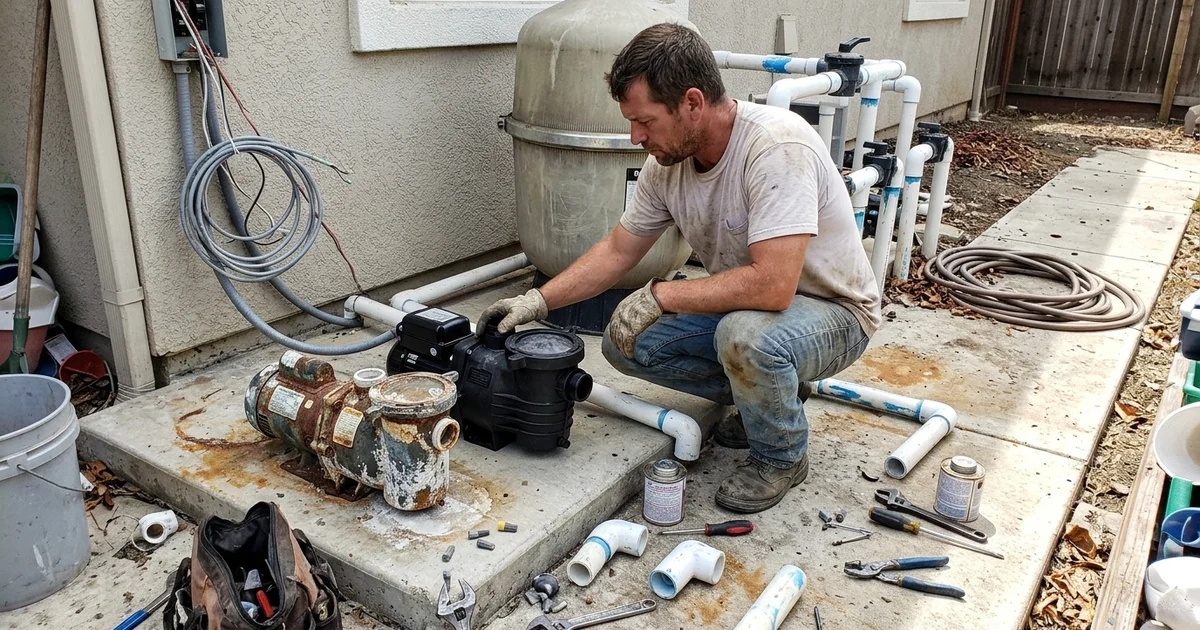
The short answer: repair a newer pump with a single failed part, and replace an older single-speed pump with repeat failures.
Most pumps fall clearly on one side or the other. The tricky ones sit in the middle, and that’s where a careful diagnosis and side-by-side quotes help.
A common rule of thumb in the pool trade says that if a repair costs more than about half the price of a new pump, replacement usually wins. Treat that as a starting point. Age and energy use matter just as much.
At Anaheim Pool Cleaners, this is how we work through a pool pump repair or replace call when we’re out for pool equipment repair. Below, you’ll find the three questions we ask first, the energy math, the warning signs of a pump on its way out, and a quick decision table.
Age, Parts and What Actually Failed
Three questions settle most cases. How old is the pump, what failed, and can you still get parts?
How old is the pump? A pump that’s a few years old usually deserves a repair. One that’s well past a decade, especially a single-speed pump, is a stronger candidate for replacement.
What failed? A pump has two main parts: the motor and the wet end (housing, impeller, seal and basket). Common failures and typical fixes:
- Start capacitor: quick, inexpensive repair
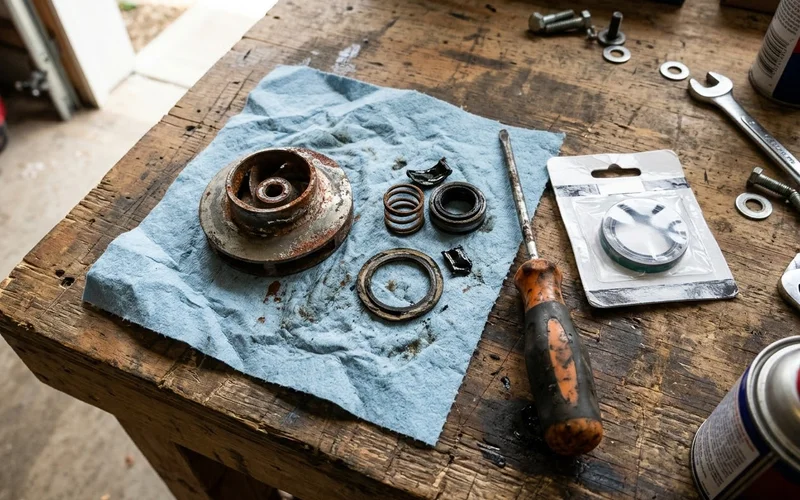
- Mechanical shaft seal: repairable, but fix it fast before water ruins the bearings
- Motor bearings: repairable or replace the motor
- Burned motor windings: motor replacement or new pump
- Cracked housing or strainer pot: wet-end parts or new pump
National cost guides commonly put a seal or capacitor repair somewhere around $100 to $250. A whole new variable-speed pump typically runs $800 to $1,200. That gap is why a small fix on a healthy pump almost always makes sense.
Are parts available? Older or discontinued models can be hard to get parts for. When parts are scarce or expensive, replacement starts to make more sense.
Why a Motor-Only Swap Costs More in California
Here’s a detail many homeowners miss. California’s Title 20 efficiency rules require replacement pool pump motors of 0.5 horsepower or more to be variable-speed. That means the cheap single-speed motor you might find online usually isn’t a legal option here.
So a motor-only replacement works best when the wet end is in good shape and the pump isn’t old. If the housing is already cracked or the pump is pushing 12 years, the cost gap between a new motor and a whole new pump shrinks fast.
Diagnosis first
The worst outcome is replacing a pump that only needed a capacitor. The second worst is putting a new motor on a pump that’s about to crack. Testing first avoids both.
The Energy Cost of Older Single-Speed Pumps
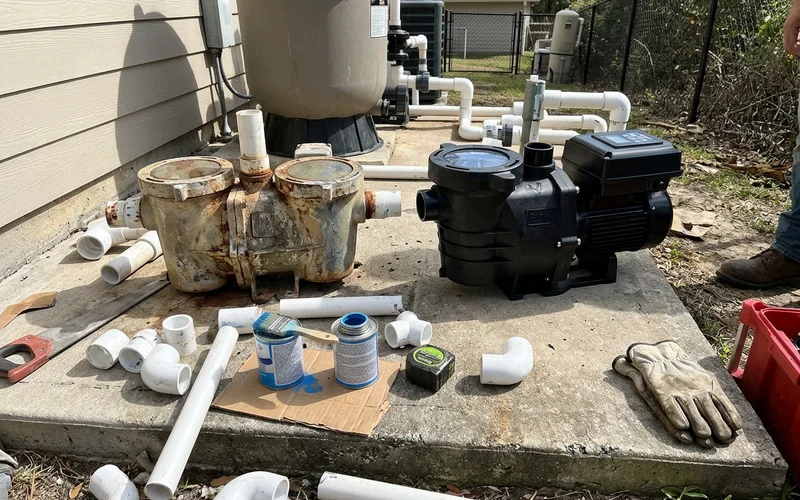
If your single-speed pump is old and has failed, replacement is often the better value, even when a repair is possible. These pumps run at full speed every minute they’re on, which makes them expensive to operate.
A variable-speed pump can move the same water at low speed for far less electricity. The California Energy Commission says its pool pump standards can save up to 80% of the electricity used to circulate and filter a pool. Because of those rules, most replacement pumps sold in California today are variable-speed anyway.
Before you decide, run through these quick checks:
- Look at the pump’s runtime. A single-speed pump running 8 or more hours a day is your biggest energy cost.
- Check your utility’s rebate page. Programs change, so confirm what’s available before you buy.
- Compare lifetime cost, not sticker price. A cheaper repair on a power-hungry pump can cost more over a few summers.
Repeat Failures Are a Signal
One repair on an aging pump is reasonable. Two or three in a short stretch usually means the pump is wearing out across the board.
Picture the typical chain: you replace the capacitor, then the bearings, and now the seal is leaking. The next failure is probably not far away.
Try this simple test. Add up what you’ve spent on repairs in the last two years. If that total is creeping toward half the price of a new pump, you’re paying for a replacement in installments.
Decision Table
Use this as a quick gut check. Your pump’s exact condition always comes first.
| Situation | Our usual recommendation |
|---|---|
| Newer pump, one failed part | Repair |
| Leaking shaft seal caught early | Repair the seal |
| Motor failed, wet end in good shape, pump not old | Motor-only replacement |
| Older single-speed pump, any major failure | Replace with variable-speed |
| Cracked housing plus motor problems | Replace |
| Repeat failures in a year or two | Replace |
| Parts discontinued or very expensive | Replace |
Our Approach
If you’re asking yourself, “should I replace my pool pump?”, we’ll give you a straight answer. We diagnose the whole system before quoting, then lay out repair and replacement side by side when both make sense.
You’ll see the upfront cost of each, plus an honest opinion on which we’d choose for our own pool. That includes the pool pump motor replacement vs new pump question, since the right call depends on your pump’s age and wet-end condition.
If you want to understand replacement pricing first, our guide on pool pump replacement cost in California covers what drives the price. When you’re ready, request a free estimate and we’ll take a look.