
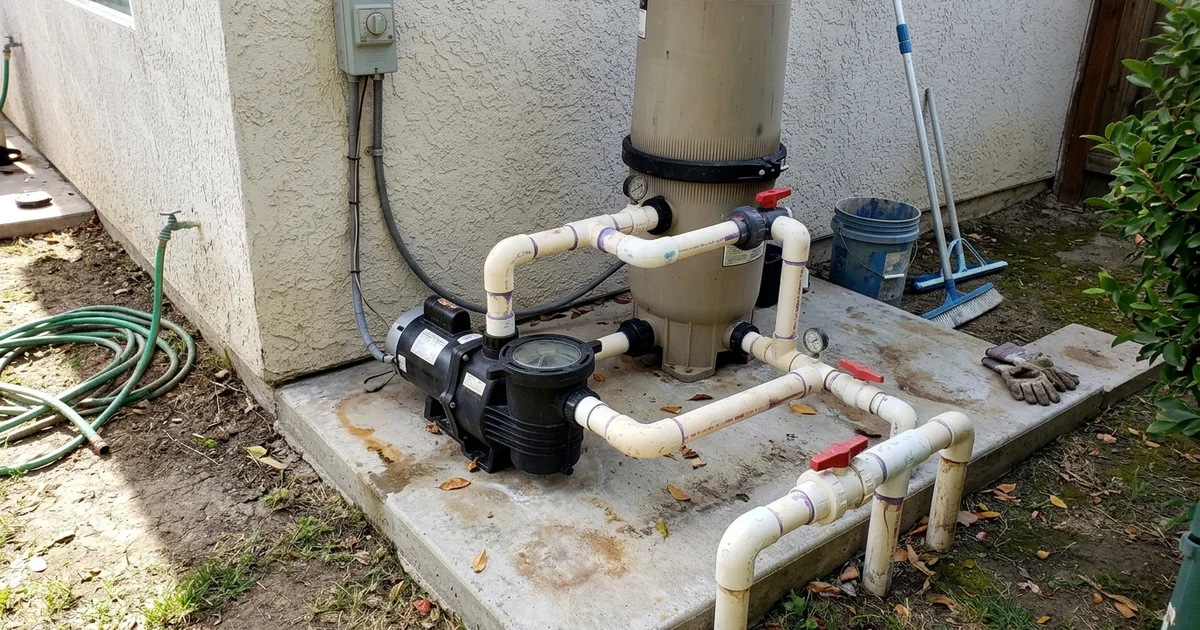
What Your Pool Pump Noise Is Telling You
A pool pump making a loud noise is almost always telling you something specific. A healthy pump runs with a steady, even hum. Screeching, rattling, grinding, or humming without spinning each point to a different cause.
Matching the sound to the cause tells you whether to shut it off now and call for pool equipment repair, or whether a quick check will fix it. In our experience, most Anaheim pool owners can narrow it down in under a minute.
| Noise | Most likely cause | What to do |
|---|---|---|
| High-pitched screech or squeal | Worn motor bearings (or early cavitation) | Turn off soon and schedule repair |
| Rattle, like gravel in the pump | Cavitation from blocked flow or low water | Check baskets, valves and water level |
| Grinding or scraping | Failing bearings or debris in the impeller | Turn off and inspect |
| Hum, but motor won’t spin | Failed capacitor or seized motor | Turn off immediately and call |
| Rhythmic gurgling or surging | Air in the suction line | Check lid O-ring and water level |
Grinding is the most common complaint. Inyo Pools, a large online pool supplier, says it’s almost always the motor bearings.
Screeching or Squealing: Worn Motor Bearings
A loud, high-pitched screech that gets worse as the pump runs is the classic sign of a pool motor squealing from worn bearings. Bearings wear out with age and water exposure, often after a leaking mechanical shaft seal lets water drip into the motor. Once they start to go, the noise usually gets louder fast.
Here’s what to weigh before you decide on a fix:
- Bearing replacement: Angi’s pricing guide puts it at roughly $150 to $350 for most pumps, and it makes the most sense on a newer motor.
- New pump: A replacement typically runs $900 to $2,500 installed, and variable-speed models land at the higher end.
- The 50% rule: If the repair costs more than half the price of a new pump, replacement is usually the better value.
Either way, don’t let it scream for weeks. A failed bearing can overheat and burn out the motor windings, which turns a modest repair into a full motor replacement.
Local rules matter here too. According to the California Energy Commission’s Title 20 standards, residential pool pumps above 1 total horsepower must be variable-speed, and replacement motors of 0.5 horsepower or more must be variable-speed as well. That can change the math on an older single-speed motor.
Gravel or Rattle: Cavitation
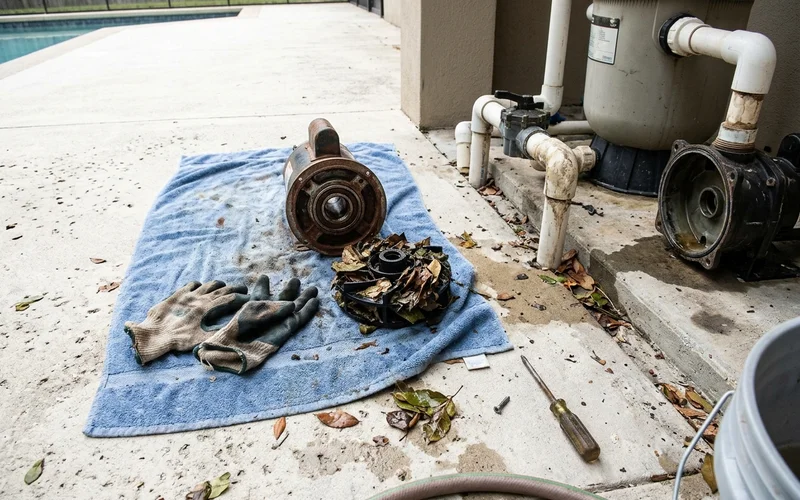
A rattling sound, like small rocks tumbling through the pump, usually means cavitation. The impeller is starving for water and pulling in air, and the bubbles collapse noisily against it. Cavitation is also hard on the pump, since running that way for long can wear the impeller and the seals.
Common causes:
- A full skimmer basket or pump strainer basket
- Leaves or debris jammed in the impeller
- A suction valve partly closed
- A water level below the skimmer opening
- A dirty filter that restricts flow
Safe owner check
With the pump off, empty the skimmer and pump baskets and make sure the water level is halfway up the skimmer opening. If the rattle continues after restarting, the impeller may be clogged and needs a pro.
One pitfall we see often: homeowners hear a screech and assume the bearings are gone. Early cavitation can sound similar. Check the baskets and water level first, since that costs nothing.
Humming Without Starting: Capacitor or Seized Motor
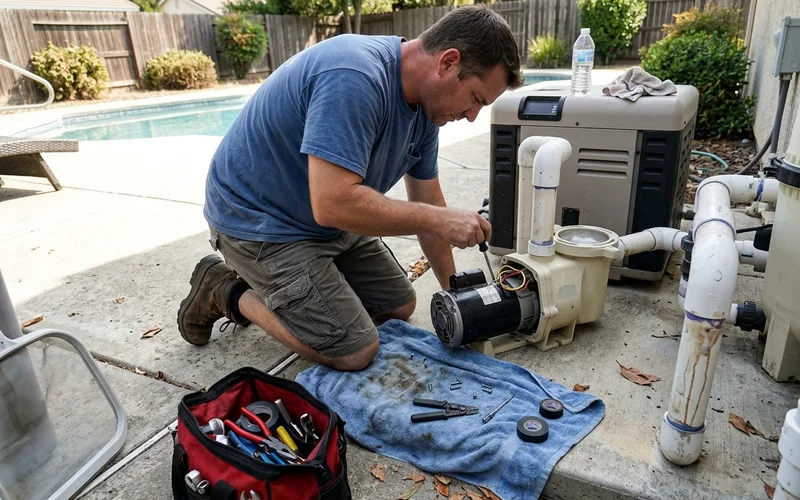
If the motor hums but the shaft doesn’t turn, the most common cause is a failed start capacitor. The capacitor gives the motor a kick to get spinning. When it fails, the motor just hums and heats up.
A seized motor sounds the same. Rusted bearings or a jammed impeller can lock the shaft. Turn the pump off right away, because leaving a humming motor on can trip the breaker or burn it out.
Capacitor replacement is a quick, affordable repair when that’s the problem. It involves electrical parts, though, so it’s a job for a trained technician.
Safe Checks vs When to Call
You can safely check baskets, the water level, and whether valves are open, all with the pump turned off. Leave anything electrical, anything inside the motor, and anything that involves opening the pump housing to a professional.
Shut the pump off and call if you notice:
- Screeching that’s getting louder
- Humming with no spin
- Burning smells or smoke
- Water dripping from under the motor
- A tripped breaker that trips again when reset
When we diagnose a noisy pool pump, we check the whole system. A noise is sometimes a symptom of something else, like a clogged filter or a leaking seal. If your pump is near the end of its life, our guide on whether to repair or replace your pump walks through the decision.
We’ll quote both options when it’s a close call. Call us if your pool pump is making a loud noise and you’re not sure which sound you’re hearing, and we’ll get an Anaheim technician out to take a look.