
Is Your Pool Leaking or Just Evaporating?
Every pool in Anaheim loses water, so the real question is whether yours is losing more than evaporation can explain. Inland heat, low humidity, wind and a hot sun can pull a surprising amount out, especially in summer and during Santa Ana winds.
A pool losing water daily at a steady pace isn’t always a leak. But if the level keeps dropping faster than weather can explain, something may be leaking.
Some of those leaks are at the equipment pad. We fix those as part of pool equipment repair.
Below, we’ll cover what normal evaporation looks like, how to run a bucket test, and which leaks we can repair.
How Much Evaporation Is Normal?
In hot, dry, windy weather, evaporation commonly runs a quarter inch a day, and sometimes more. Pool-industry guides, including American Leak Detection’s, put typical Southern California summer loss at roughly a quarter to a half inch daily. A drop of an inch or two over a hot week can be entirely normal.
These factors push evaporation higher:
- Hot, sunny days and warm nights
- Low humidity and Santa Ana wind events
- Waterfalls, spillways and fountains that spray water into the air
- A heated pool or spa
- Lots of splashing and swimmer use
A pool that loses more than half an inch a day, especially in cool or humid weather, points toward a leak. The way to know for sure is a bucket test.
The Bucket Test, Step by Step
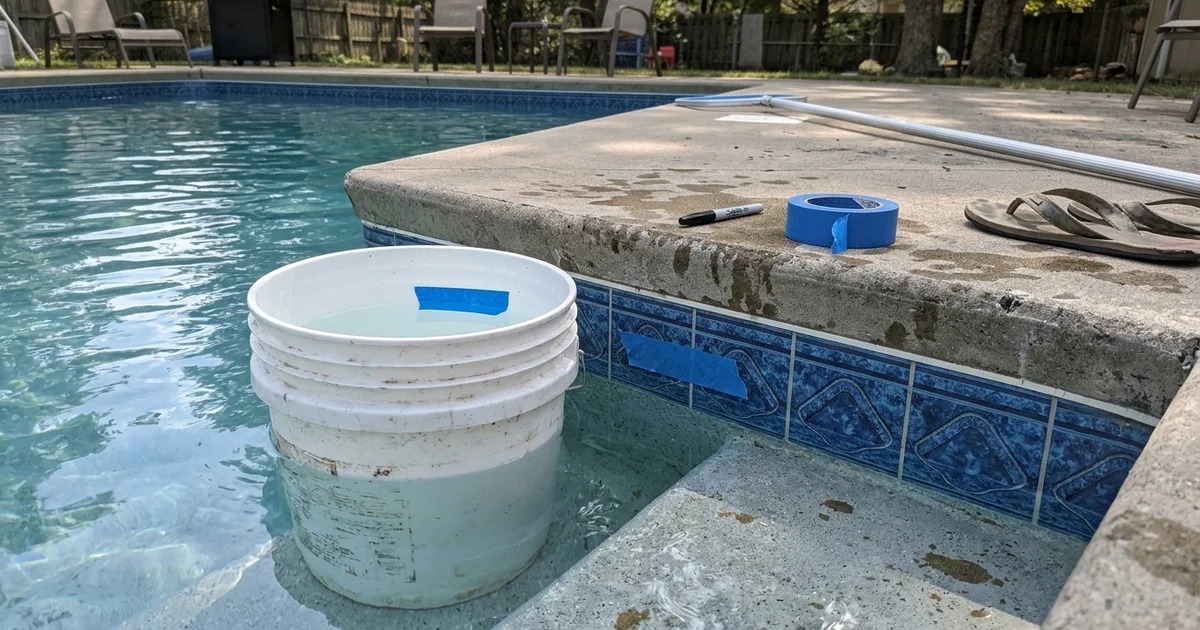
A pool bucket test compares your pool’s water loss to the evaporation from a bucket sitting in the same conditions. You need a bucket, a marker or tape, and 24 hours.
- Fill a bucket with pool water to about an inch from the top.
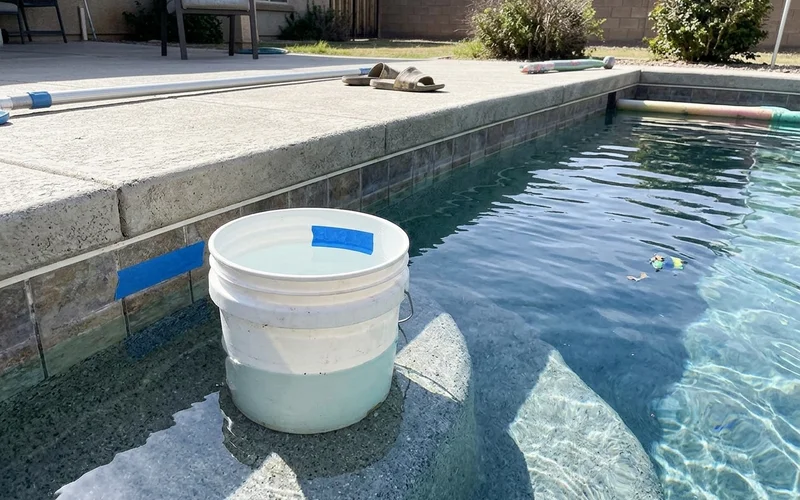
- Set it on the first or second step so it sits in the pool at the same temperature.
- Mark the water level inside the bucket and the pool level on the outside of the bucket.
- Run the pump on its normal schedule. Turn off any auto-fill.
- After 24 hours, compare the two drops.
If the pool dropped more than the bucket, the difference is water you’re losing to something other than evaporation. Our pool water loss calculator turns your readings into gallons per day.
What the numbers mean
If the pool drops noticeably more than the bucket, around an eighth of an inch a day or more beyond evaporation, a leak is worth checking. Rain, splash-out, auto-fill and backwashing can throw off the results, so repeat the test if any of those happened.
One tip from the field: if the first test points to a leak, run it again with the pump off. A different result between the two runs helps narrow down whether the loss is tied to the pressurized plumbing.
Equipment-Pad Leaks We Repair
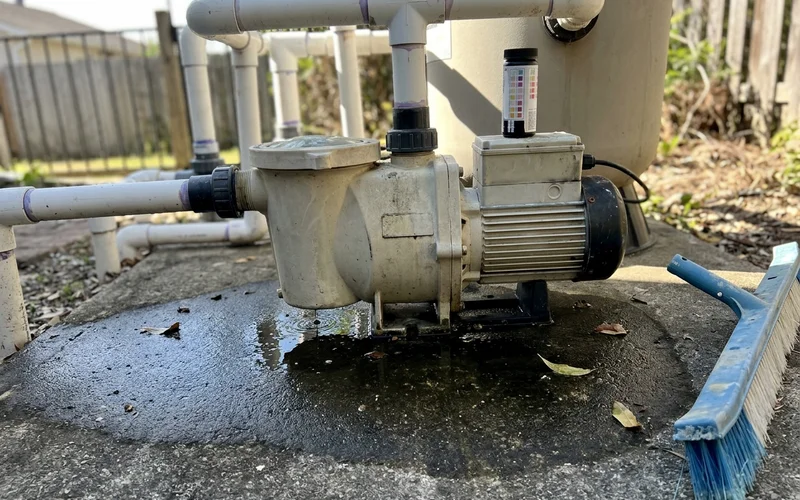
Many leaks are right at the equipment pad, where they’re easier to find and fix. Check the pump, filter and valves first, since a slow drip there can add up to gallons a day.
| Leak point | Signs |
|---|---|
| Pump mechanical shaft seal | Water dripping under the pump motor, rusty motor base |
| Pump lid or drain plugs | Wet pad around the pump, air in the strainer pot |
| Filter tank and O-rings | Water around the filter base or clamp band |
| Multiport or backwash valve | Water running out the waste line when it shouldn’t |
| Unions and valves | Drips or spray at plumbing joints |
A leaking shaft seal is worth fixing quickly. The same water that’s leaking can get into the motor bearings and turn a seal repair into a motor replacement.
Structural Leaks Need a Specialist
If the pad is dry and the bucket test still shows extra loss, the leak may be in underground plumbing, the pool shell, a light niche or a fitting. Finding those takes specialized leak-detection equipment, which isn’t a service we offer.
We’ll tell you honestly when the evidence points there, so you can call a leak-detection company with a clear picture of what’s going on.
If you’re seeing water loss and want a professional to check the equipment pad, we’ll inspect the pump, filter, valves and plumbing and repair what we find. Reach out to Anaheim Pool Cleaners to schedule a visit.