
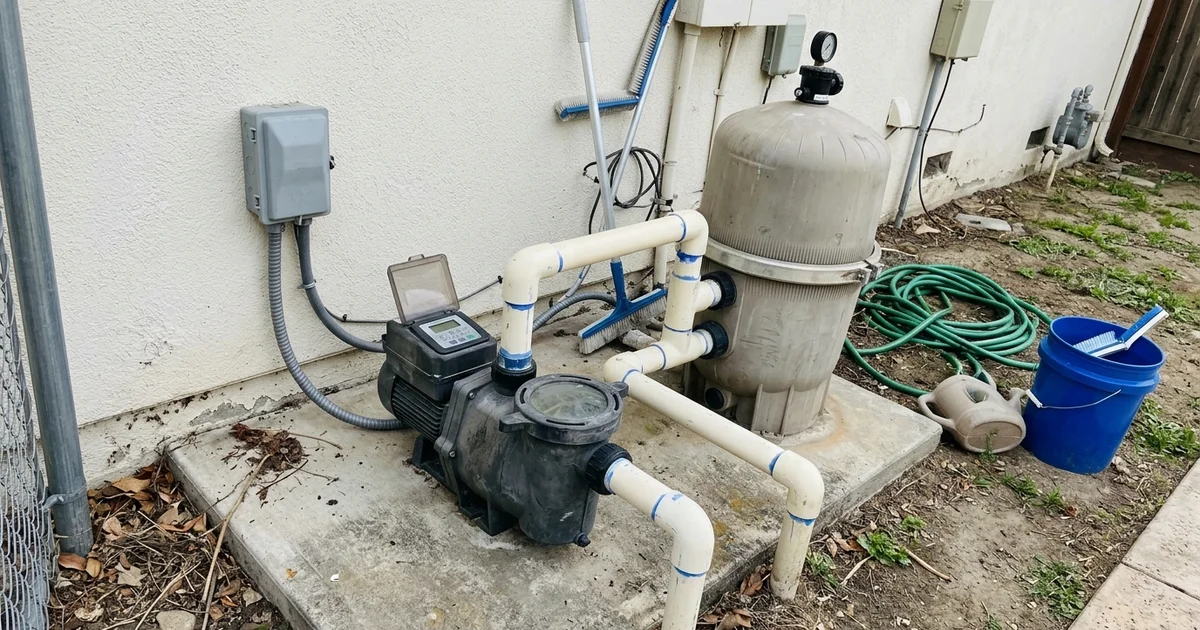
In most cases, yes. If you’re replacing a pool filtration pump in California, efficiency rules mean the replacement will almost always be a variable-speed pump or one that meets similar efficiency standards.
That’s worth knowing before your old pump fails. It changes the cost of pool pump replacement and the savings you’ll see afterward.
Title 20 Appliance Efficiency Standards
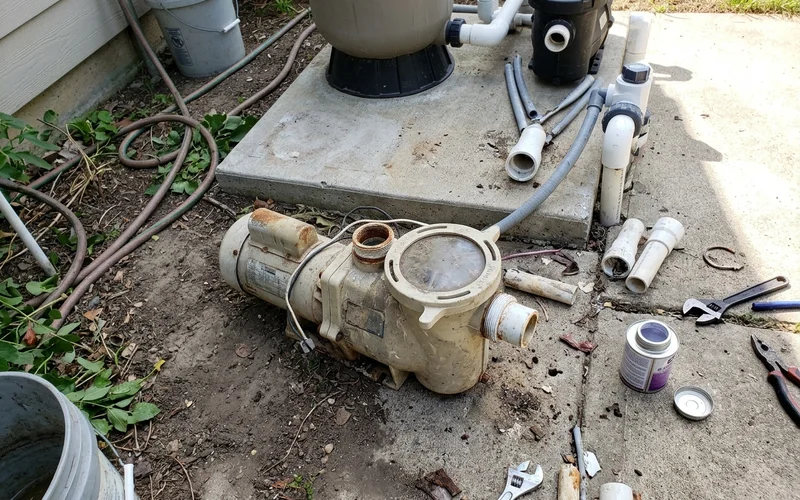
Title 20 is the California pool pump law that matters most for a swap. It sets minimum efficiency requirements for residential pool pumps and motors sold in the state, and an old single-speed pump usually can’t be replaced with another one like it.
The physics explains why. Cut a pump’s speed in half and its energy use drops to roughly one eighth. Running slowly for longer uses far less power than running fast for a few hours.
Federal rules point the same way. The U.S. Department of Energy’s standards for dedicated-purpose pool pumps took effect in July 2021, and they made variable-speed models the practical choice for most pools.
The exact thresholds have changed over time and depend on pump size and type. We check the current requirements whenever we quote a replacement, so you don’t have to track them.
Title 24 for New and Renovated Pools
Title 24 is California’s building energy code, and it applies to new pools and major renovations. It covers pump efficiency, controls and how the plumbing is sized. If you’re building a pool or doing a big remodel, your contractor has to meet these rules.
For a straight pump replacement on an existing pool, Title 20 is usually the bigger factor.
What this means for you
When your old single-speed pump fails, plan on a variable-speed replacement. The upfront replacement cost is higher, but the energy savings usually make up much of the difference over the pump’s life.
How Much Energy Low-Speed Operation Saves
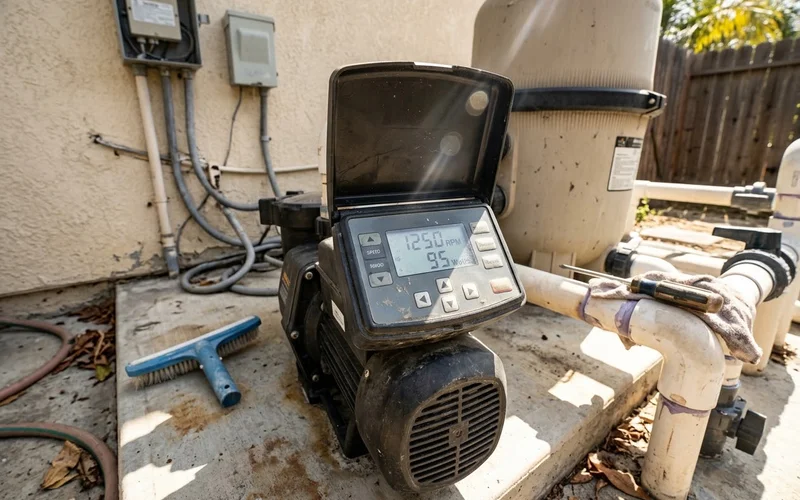
Variable speed pump savings are big, and they come from running slow. Pump manufacturers and energy researchers commonly put the reduction at 50 to 90 percent compared with a single-speed pump, depending on how you run it.
A variable-speed pump at low speed can move the same water for a fraction of the electricity. With Southern California electricity rates, that difference adds up quickly.
| Pump type | How it runs | Energy use |
|---|---|---|
| Single-speed | Full speed whenever it’s on | Highest |
| Two-speed | Low for filtration, high for cleaning | Moderate |
| Variable-speed | Programmable speeds, mostly low | Lowest |
Your savings depend on your old pump’s horsepower, how many hours it runs and your electricity rate. Our pool pump energy cost calculator gives you an estimate based on your own numbers.
Utility Rebates
Rebates exist, but they come and go. Utilities have offered money back on qualifying variable-speed pumps at various times, and programs, eligibility and amounts change.
Your utility matters here. Anaheim homes are served by Anaheim Public Utilities, while many nearby cities get power from Southern California Edison. Check your own provider’s current offers before you buy.
We can help you confirm that the pump we recommend is a model that qualifies.
Getting the Right Replacement
A variable-speed pump only saves money if it’s set up correctly. Here’s what we handle on every install:
- Size the pump to your plumbing and filter
- Program sensible speeds for filtration and cleaning
- Make sure any spa or water feature still gets the flow it needs
If your current pump is still working well, we’re happy to tell you that too. Replacing a healthy pump early isn’t always the best use of your money.
When you’re ready, call Anaheim Pool Cleaners for a quote on a compliant replacement.