
Is Your Pool VGB-Compliant?
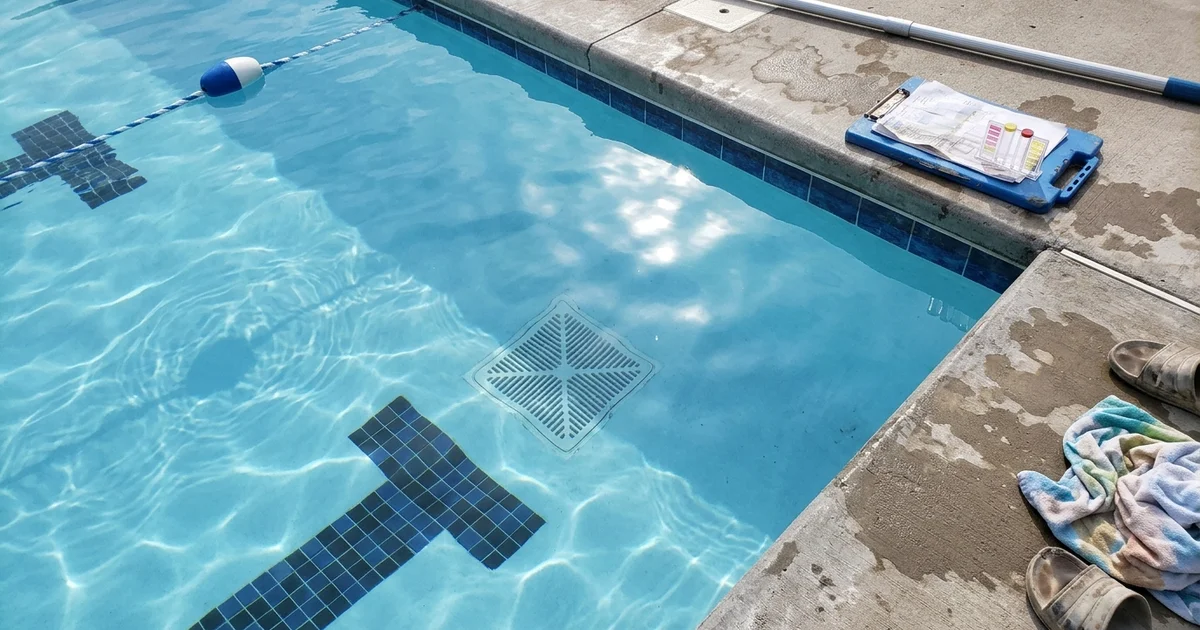
If you manage an HOA, apartment or hotel pool, the Virginia Graeme Baker (VGB) Pool and Spa Safety Act applies to you. This federal law requires a VGB compliant drain cover on every public pool and spa.
Compliance mostly comes down to three things. You need certified covers, you need to keep them in good condition, and you need to replace them before they expire.
We check drain covers as part of every commercial pool service visit. Most problems show up long before an inspector does.
VGB Act Basics
The VGB Act is the federal anti-entrapment law for public pools and spas. Congress signed it on December 19, 2007, and the public pool requirements took effect on December 19, 2008.
The law is named for Virginia Graeme Baker, a seven-year-old who died in 2002 after being trapped by the suction of a hot tub drain. Strong suction at a single drain can hold hair, limbs or bodies underwater. That’s why the rules focus on the drain itself.
Here’s what the Virginia Graeme Baker Act asks of a public pool or spa:
- Drain covers that meet the federal anti-entrapment standard
- A second anti-entrapment system when the pool has a single main drain that isn’t an “unblockable” design
- Options for that second system include multiple drains, suction-limiting vent systems, safety vacuum release systems and automatic pump shutoff
The Consumer Product Safety Commission (CPSC) enforces the law, and the rules are codified at 16 C.F.R. part 1450. California public pool rules also address drain safety.
Drain Cover Certification and Expiry Dates
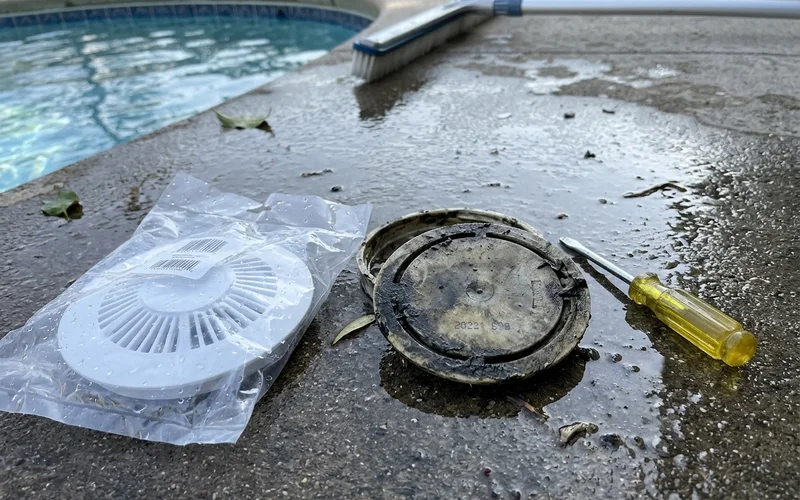
A compliant drain cover is certified to the ASME/ANSI A112.19.8 standard or its successor, ANSI/APSP/ICC-16 2017. The CPSC’s updated standard became effective May 24, 2021. Each cover is also certified for a specific flow rate and a limited service life, and that information is usually marked right on the cover.
| What to check | Why it matters |
|---|---|
| Certification marking | Confirms the cover meets the anti-entrapment standard |
| Rated flow | Must match or exceed the pump’s flow through that drain |
| Expiration or service life | Covers degrade in sun and chemicals |
| Physical condition | Cracks, missing screws or warping make it unsafe |
| Secure attachment | All screws present and tight |
Look for a “Life: X Years” stamp. Manufacturers set that number, and industry sources put it anywhere from about 3 to 10 years depending on the brand and model.
The stamp shows years, not a calendar date. Without an install record, nobody can tell when your cover actually expires.
Plan ahead for expiration
Keep a record of when each cover was installed and when it expires. Replacing on schedule is far easier than closing the pool because an inspector spotted an expired date.
When Covers Need Replacement
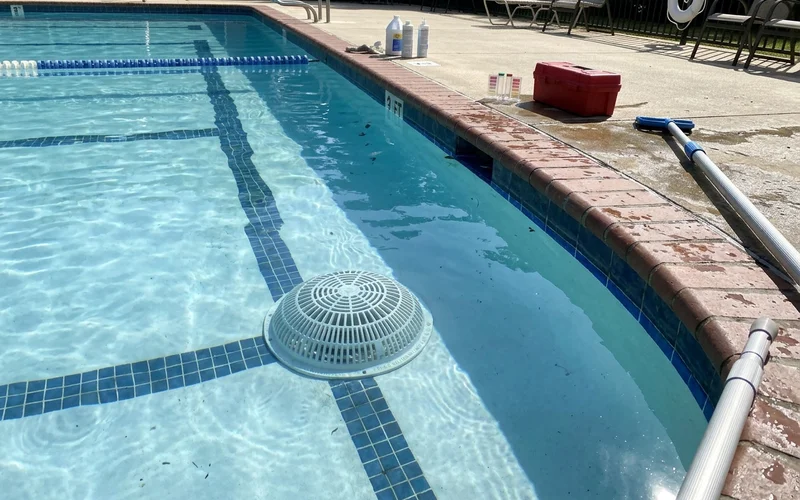
Replace a cover as soon as any one of these is true:
- The certified service life has passed
- The cover is cracked, chipped or warped
- Screws are missing or stripped
- The pump was upgraded and the cover’s rated flow is no longer enough
- The cover isn’t a certified anti-entrapment model
A broken or missing drain cover is an immediate hazard. Close the pool until it’s fixed.
Pick the replacement carefully. It should be a certified model with a flow rating that covers your pump, and it should be made for your drain’s location, floor or wall. A cheap lookalike without the markings won’t pass.
Safety-Equipment Checks During Routine Service
On commercial visits, we look at drain covers along with gates, signs and safety equipment. Anything damaged, missing or nearing expiration gets flagged. That gives you time to schedule replacement before it becomes a write-up or a closure.
Our overview of California Title 22 pool requirements covers the other safety items inspectors check.
Not sure your pool has a VGB compliant drain cover? Ask us to check the stamps, flow ratings and install dates at your next visit, and we’ll tell you exactly what needs attention.