
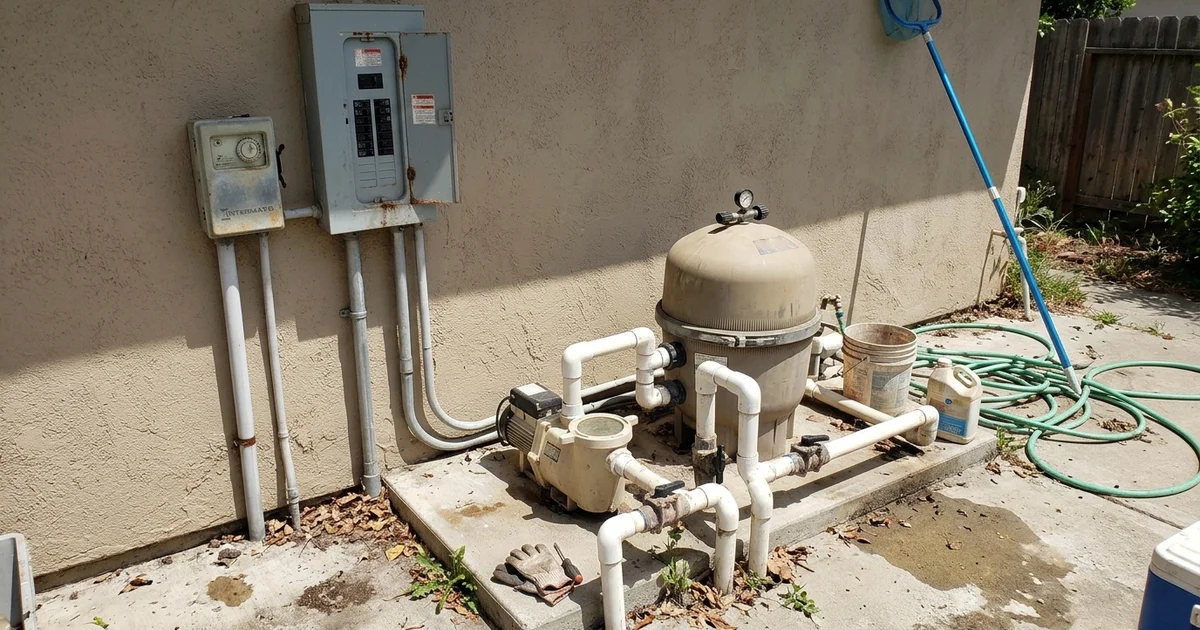
Why Your Pool Pump Won’t Turn On
When your pool pump isn’t working, the cause almost always falls into one of three buckets: control, power or motor. Some of those are simple settings you can check yourself. Others involve electrical work around water, and that’s a job for a pro.
If your pool pump keeps tripping the breaker, treat that as the clearest warning sign of the three. Here’s how to tell which problem you have, and when to call for pool equipment repair.
Timer, Automation and Breaker Checks
Check the timer, the pump’s own schedule and the breaker first. These take about five minutes, and they fix more “dead pump” calls than most homeowners expect.
- Timer settings. Mechanical timers can have a trip pin out of place or a clock that’s wrong after a power outage. Digital timers and automation systems can be set to off or to a schedule you didn’t expect.
- Variable-speed pump schedule. Many variable-speed pumps have their own onboard schedules. Check the control panel for errors or a paused schedule.
- Breaker or GFCI. Look at the breaker in your panel and any GFCI near the equipment. If it’s tripped, you can reset it once.
Power outages are a common culprit in Anaheim, especially after summer heat waves. A short outage can knock a timer clock off by hours, so the pump runs at the wrong time or not at all.
Safety first
If the breaker trips again right after you reset it, stop. Don’t keep resetting it. A repeat trip means there’s a fault, and water plus electricity is not a DIY situation.
Failed Capacitor or Seized Motor
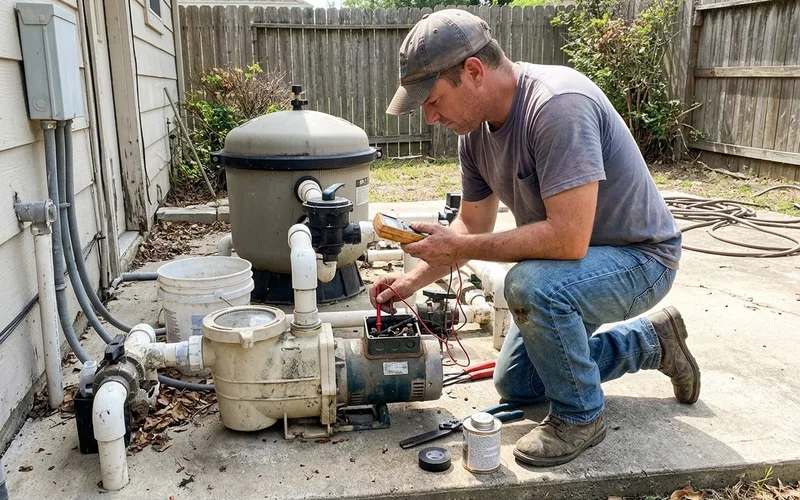
If the pump has power but won’t spin, listen to it. A hum with no motion usually means a failed start capacitor or a seized motor.
- Start capacitor. This small part gives the motor its initial push. When it fails, the motor hums and gets hot. The part itself often runs $10 to $30, and with labor a capacitor fix usually lands around $120 to $180.
- Seized motor. Rusted bearings or a jammed impeller can lock the shaft. Sometimes the impeller just needs clearing. Sometimes the bearings are gone.
- Burned-out motor. If the motor smells burnt, is very hot or shows signs of melting, the windings may be damaged. That usually means motor replacement, which commonly runs $200 to $600 or more for the motor alone.
Here’s the pro tip: don’t keep hitting the power button on a humming pump. Every restart attempt heats the windings. A $20 capacitor problem can turn into a full motor replacement that way.
Why GFCI Breakers Trip
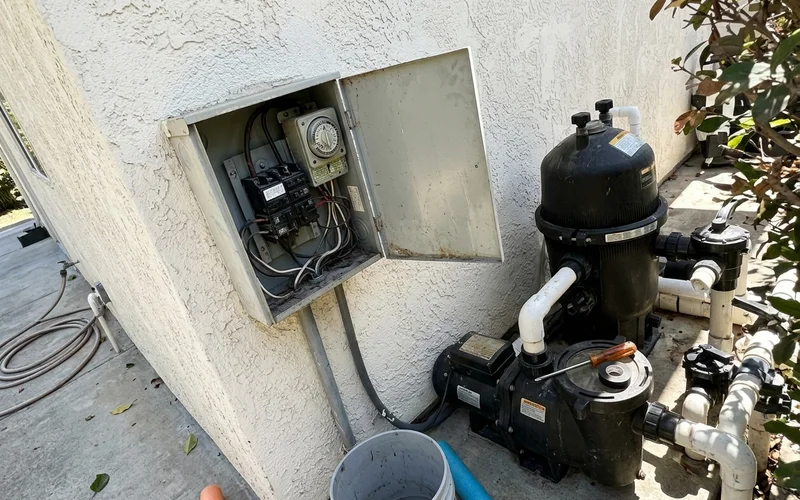
A GFCI breaker trips when it senses current leaking to ground. Pool-equipment GFCIs are Class A devices, which means they trip at about 5 milliamps. That’s far below what it takes to hurt someone, and it’s the reason they exist.
On pool equipment, the usual causes are:
- Water getting into the motor through a failed shaft seal
- Wiring chewed by rodents or cracked by sun
- Moisture in a junction box
- Failing motor windings
Variable-speed drives can add another wrinkle. Their normal operation creates electrical noise, and some GFCIs read that noise as a ground fault. An electrician can sort out whether you have a real leak or a compatibility issue.
Repeated trips are the breaker doing its job. The fix is finding and repairing the fault, not replacing the breaker.
Motor Repair vs Motor Replacement vs New Pump
A failed capacitor is a cheap repair, and a cracked housing with a bad motor means a new pump. Most other cases fall in between, and the table below shows where.
| Situation | Usually best option |
|---|---|
| Newer pump, failed capacitor | Replace the capacitor |
| Newer pump, worn bearings | Bearing repair or motor replacement |
| Burned motor, good pump housing | Motor-only replacement |
| Older single-speed pump, repeat failures | New variable-speed pump |
| Cracked housing plus bad motor | New pump |
Our guide on whether to repair or replace your pump goes deeper on that choice.
California adds a rule here. Under the California Energy Commission’s Title 20 standards, replacement pool pump motors of 0.5 horsepower or more must be variable speed. That’s why a variable-speed pump is often the default when an old single-speed unit fails.
When to Call a Professional
Call us if the breaker trips repeatedly, the motor hums but won’t turn, you smell burning or the pump shuts itself off after running for a while. Any of these points to a fault that needs proper testing, not another reset.
A dead pump in summer means no circulation and no sanitizer distribution. The water can start turning within a couple of days. We’re available 24 hours, and we’ll diagnose the cause before recommending a repair or replacement.
If your pool pump is not working and the quick checks didn’t fix it, contact Anaheim Pool Cleaners and we’ll get a tech out to you.