
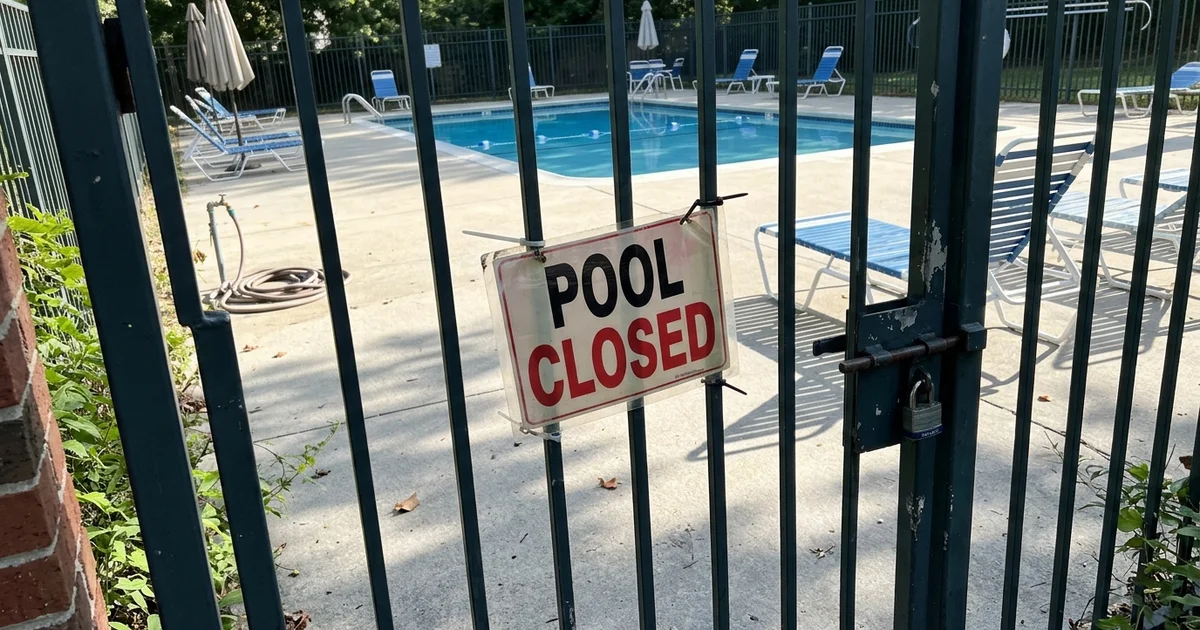
Why Commercial Pools Get Closed
Most closures don’t come out of nowhere. They follow weeks of small problems that nobody caught.
A pool closed by the health department is a pool where the inspector found an immediate risk to swimmers. In Orange County and LA County, the health agency can close an HOA, apartment or hotel pool on the spot for unsafe water, broken gates or damaged drain covers.
A 2016 CDC report found that about 1 in 8 routine inspections of public pools, hot tubs and water parks turned up a serious violation that called for immediate closure.
A closure means unhappy residents or guests, a re-inspection and sometimes fees. Most commercial pool violations are preventable with consistent commercial pool service and good records. We’ll walk through the usual causes and the steps to reopen.
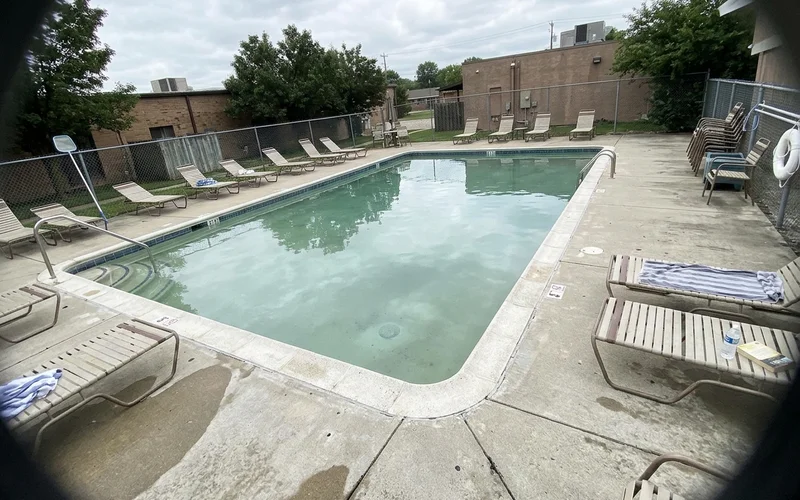
Low Sanitizer and Cloudy Water
Water quality is the top reason for closures. California’s Title 22 rules set the numbers inspectors check against.
- Low or no free chlorine. The minimum is 1 ppm, or 2 ppm if the pool uses cyanuric acid (stabilizer). Many operators miss that second number, and a reading that passes in an unstabilized pool can fail in a stabilized one.
- pH far out of range. Title 22 calls for a pH between 7.2 and 7.8. Outside that window, chlorine works poorly and swimmers’ skin and eyes get irritated.
- Cloudy water. If the main drain isn’t clearly visible from the deck, a swimmer in trouble at the bottom might not be seen. Inspectors treat this as a serious hazard, and it can close a pool by itself.
These usually happen after a busy weekend, a heat wave, an equipment failure or too few service visits. A pool that passed on Monday can fail on Friday if nobody tests in between.
Gates, Signs and Logs
Most of these violations come down to safety basics that someone stopped checking. Here’s what inspectors flag most often and why each one matters.
| Violation | Why it’s serious |
|---|---|
| Gate doesn’t self-close or latch | Lets unsupervised children in |
| Missing safety equipment | No way to reach a swimmer in trouble |
| Missing required signs | Swimmers don’t know rules or emergency steps |
| Missing or incomplete logs | No proof the water is being tested |
Missing logs alone may not close a pool, but combined with other issues they make things worse. Title 22 expects daily testing and written records of chlorine and pH, and operators need to keep those records for at least two years. A log with gaps tells the inspector the water may have gone untested.
The pattern behind most closures
It’s rarely one bad reading. It’s a pool that’s been drifting for weeks with no one catching it until the inspector arrives.
Unsafe or Expired Drain Covers
Damaged, missing or expired anti-entrapment drain covers are an immediate entrapment hazard and a common reason for closure. Covers have a limited certified life and need replacing on schedule.
The federal Virginia Graeme Baker Pool and Spa Safety Act, signed in December 2007, requires compliant anti-entrapment covers on public pools and spas. California’s AB 1020, signed in October 2009, added the same requirement to state law. Both trace back to a child who died in 2002 when a spa drain trapped her underwater.
Check the cover’s stamped expiration date at the start of each swim season. Keep the paperwork on site, because inspectors may ask to see it.
Steps to Reopen
The path back to open is straightforward, but the order matters. Skipping the paperwork is the most common reason a re-inspection fails.
- Fix the cause. Correct chemistry and clarity, repair equipment or replace drain covers.
- Document the fix. Update logs and keep receipts for parts and repairs.
- Request re-inspection. Follow the health agency’s process.
- Prevent a repeat. Adjust visit frequency and staff testing so it doesn’t happen again.
Our Orange County pool health inspection checklist covers what to review before the inspector returns.
Prevention Through Consistent Service
The best defense against commercial pool violations is a pool that’s inspection-ready every day: stable chemistry, clear water, working equipment and current records. Weekly service plus daily testing by on-site staff catches drift before it turns into a closure.
If your pool was recently closed or written up, contact us and we’ll help you get it reopened and keep it that way.